


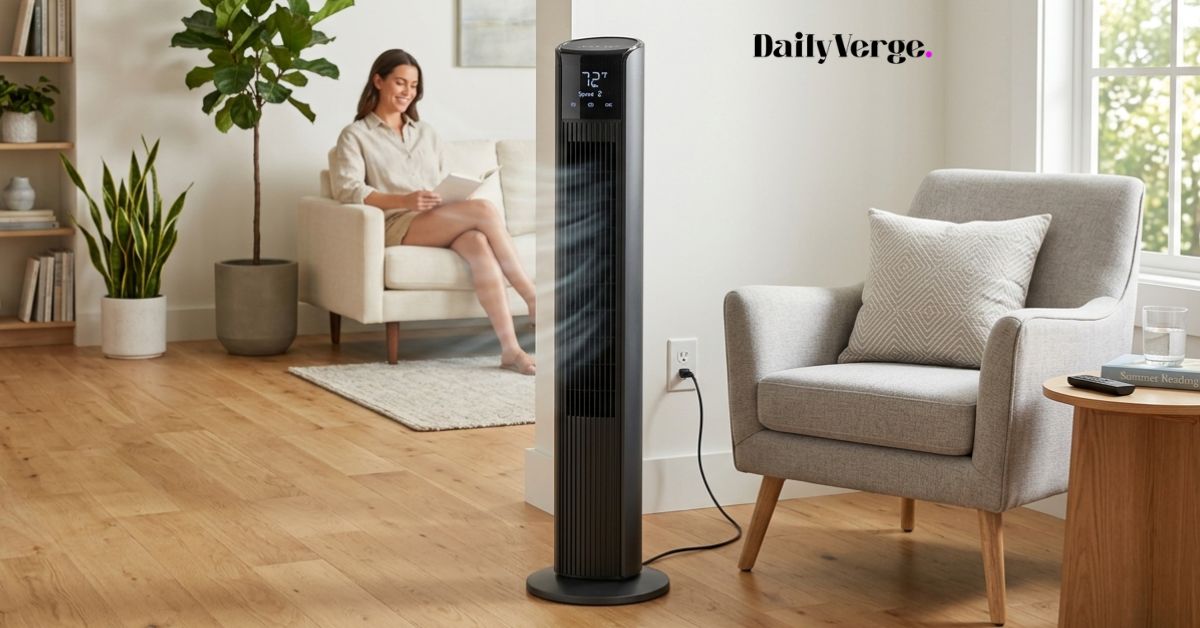
A tower fan has become one of the most popular cooling appliances in modern households, especially in regions where summers are long and intense. Unlike traditional fans, it is designed in a slim vertical structure that saves space while delivering steady airflow across the room. Many people prefer a tower fan because it combines style, performance, and convenience in one appliance. Whether used in bedrooms, offices, or living rooms, it offers a practical solution for improving air circulation without consuming too much electricity. In this article, we will explore everything you need to know about a tower fan, including its working system, benefits, features, and buying guide.
What is a Tower Fan
A tower fan is a tall, vertical air-cooling device that uses an internal rotating mechanism to distribute air evenly. Instead of visible blades like traditional fans, it has a concealed blade system inside a cylindrical or rectangular body. This design not only makes it safer but also gives it a modern appearance. The airflow is released through vertical vents, allowing air to spread across a wider area. A tower fan is commonly used in indoor environments where quiet and consistent cooling is required.
How a Tower Fan Works
The working system of a tower fan is simple yet efficient. Inside the unit, there is a rotating impeller that draws air from the surroundings. The air is then pushed through internal channels and released through narrow vertical openings. This process creates a smooth and continuous airflow that covers a larger area compared to standard fans. Many models also include oscillation features, allowing the tower fan to rotate side to side, improving air distribution in the room.
Benefits of Using a Tower Fan
One of the biggest advantages of a tower fan is its compact design. It can easily fit into small spaces, making it ideal for apartments or offices. Another benefit is energy efficiency. A tower fan consumes significantly less electricity compared to air conditioners, which makes it cost-effective for daily use.
Noise reduction is another key advantage. Many modern models are designed to operate quietly, making them suitable for bedrooms and study areas. A tower fan also enhances safety since its blades are enclosed, reducing the risk of accidental contact. Additionally, its stylish design adds a modern touch to home interiors.
Tower Fan vs Traditional Fan
When comparing a tower fan with a traditional ceiling or pedestal fan, the differences are quite noticeable. A traditional fan circulates air in a circular pattern, while a tower fan distributes air in a more focused and even manner. This makes the cooling experience more consistent.
A tower fan is also more space-efficient. Unlike bulky fans, it takes up minimal floor space. On the other hand, traditional fans may provide stronger airflow in open spaces, but they lack the design and smart features of a tower fan. In modern homes, many users prefer a tower fan due to its balance of performance and aesthetics.
Key Features to Look For
When choosing a tower fan, several features should be considered. Speed settings are important because they allow users to control airflow intensity. Most models come with multiple speed levels to suit different weather conditions.
Oscillation is another essential feature. It allows the tower fan to rotate and spread air evenly across the room. A timer function is also useful, especially for nighttime use, as it automatically turns off the device after a set time.
Remote control functionality adds convenience, allowing users to adjust settings without moving. Some advanced models of tower fan also include air purification and smart connectivity features, making them even more efficient for modern lifestyles.
Energy Efficiency and Cost Savings
A major reason people choose a tower fan is its low energy consumption. Compared to air conditioners, it uses significantly less electricity, which helps reduce monthly bills. Even if used for long hours, a tower fan remains cost-effective. This makes it a practical choice for families looking to stay cool without increasing energy expenses.
Proper Usage and Maintenance Tips
To ensure long-lasting performance, proper maintenance of a tower fan is important. Regular cleaning prevents dust buildup, which can affect airflow quality. The exterior vents should be wiped gently, and internal components should be cleaned according to manufacturer instructions.
It is also recommended to place the tower fan on a flat surface for stable operation. Avoid blocking airflow vents, as this reduces efficiency. With simple care, a tower fan can last for many years without performance issues.
Common Problems and Solutions
Like any appliance, a tower fan may develop minor issues over time. One common problem is reduced airflow, usually caused by dust accumulation. Cleaning the vents can easily fix this issue.
Another issue is unusual noise, which may occur due to loose internal parts or dirt buildup. In such cases, maintenance or servicing is required. If the tower fan stops working completely, checking the power connection is often the first step before seeking professional repair.
Why Tower Fans Are Popular Today
The increasing popularity of a tower fan is due to its combination of modern design, efficiency, and affordability. In urban homes where space is limited, its slim structure makes it highly practical. It also fits well with contemporary interior designs, making it both a functional and aesthetic appliance.
Another reason for its popularity is versatility. A tower fan can be used in different settings such as bedrooms, offices, and small shops. Its ability to provide consistent airflow without high energy usage makes it a preferred choice for many households.
Buying Guide for Tower Fan
Before purchasing a tower fan, it is important to consider room size, features, and budget. For small rooms, a basic model with standard speed settings is sufficient. For larger rooms, a powerful model with oscillation and multiple modes is recommended.
Noise level should also be checked, especially if the fan will be used in bedrooms. Energy rating and build quality are additional factors that determine long-term performance. Choosing the right tower fan ensures better comfort and efficiency.
Conclusion
A tower fan is a practical and modern solution for everyday cooling needs. It offers a combination of energy efficiency, compact design, and smooth airflow that makes it suitable for various environments. Whether for home or office use, it provides reliable comfort during hot weather. With proper selection and maintenance, a tower fan can be a long-lasting and valuable addition to any space.
FAQs
What is the main purpose of a tower fan
A tower fan is designed to improve air circulation in indoor spaces while saving energy and space. It provides steady cooling without taking up much room.
Is a tower fan better than a regular fan
A tower fan offers more even airflow and modern features, while regular fans may provide stronger direct air. The choice depends on personal needs.
Does a tower fan consume a lot of electricity
No, a tower fan is energy efficient and consumes much less electricity compared to air conditioners, making it cost-effective for daily use.
Can a tower fan cool a whole room
A tower fan helps circulate air throughout a room, but it does not cool like an air conditioner. It improves comfort by increasing airflow.
How often should a tower fan be cleaned
A tower fan should be cleaned regularly, at least once every few weeks, to maintain proper airflow and ensure long-term performance.
Read more. technology guides and helpful insights on our website.
