


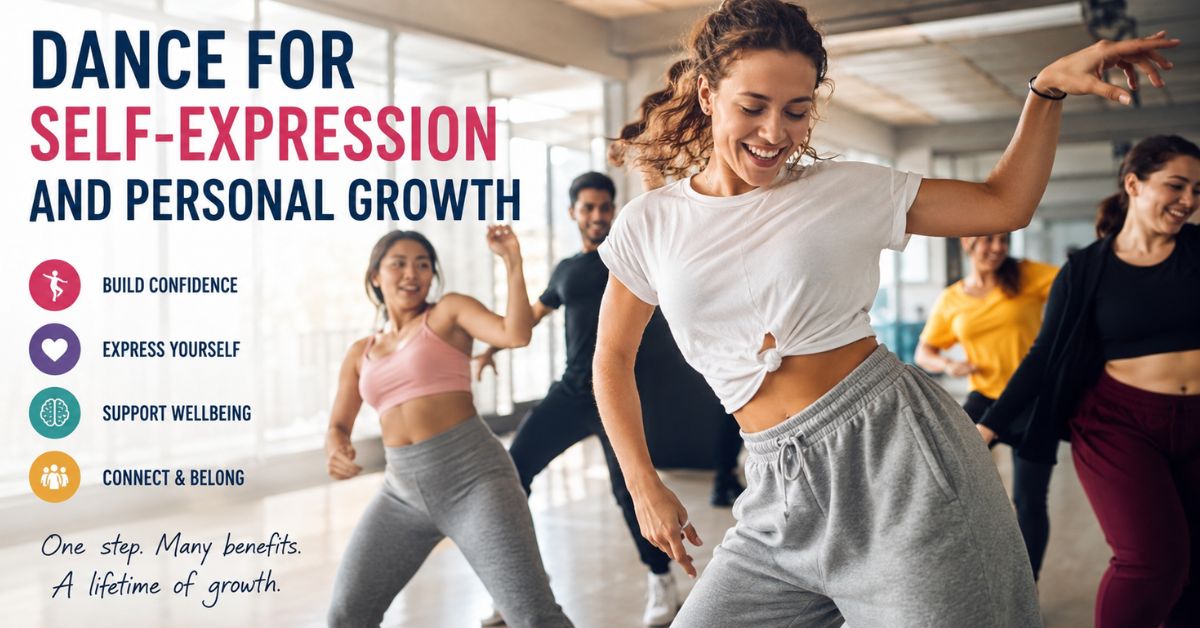
There is something wonderfully plain and honest about dance. No need for fancy words, no need to have the right answer ready in your head. You just move, and somehow that movement says what a sentence never quite can. For plenty of Australians, that is exactly why dance keeps drawing people in. It is not only about footwork, timing, or remembering which way to turn. It is about letting the body have a say.
In places like Melbourne, Sydney, Brisbane, and even smaller regional towns where community spirit still carries a lot of weight, dance often slips into people’s lives at the right moment. A local class after work. A school concert. A wedding where the dance floor gets a bit chaotic after dessert. These moments seem small, yet they often open a door to confidence, creativity, and a stronger sense of self.
Self-expression without needing perfect words
Not everyone is keen on speaking up in a room full of people. Some folk are quieter by nature. Some are still finding their feet, quite literally and emotionally. Dance offers a different sort of language. A shoulder roll, a leap, a sharp pause, even a clumsy bit of improvised swaying, can say, “This is me right now.” That is a powerful thing for anyone who has ever felt stuck in their own head.
What makes dance especially appealing is the freedom baked into it. You can be graceful one minute and gloriously awkward the next. There is room for polish, but there is also room for personality. That matters. It tells people that self-expression does not have to look neat to be real.
In many Australian studios, teachers often encourage students to bring their own flavour into the movement. A bit more attitude here, a softer finish there, maybe a cheeky grin if the music asks for it. That flexibility helps dancers trust their instincts. Over time, they stop copying and start creating. It is a subtle shift, but a meaningful one.
Confidence grows in small, surprising ways
Confidence rarely arrives with a trumpet fanfare. More often, it shows up quietly. One day a person notices they are standing a little taller. Another day they try a step they once avoided. Then, before long, they are moving with more ease and less self-consciousness.
That is one of the lovely things about dance. Progress is visible. You can feel it in your body. You can spot it in the mirror. Even a beginner who misses half the counts can still leave class thinking, “I actually did that.” And honestly, that feeling can carry into the rest of life.
For teenagers especially, dance can be a powerful confidence-builder. School can be a rough place for self-esteem, with all the comparison and awkward growing-up business that goes with it. Dance gives young people a space where effort matters more than perfection. A shy student who barely speaks at lunch might suddenly come alive in rehearsal. That change can be a real turning point.
How movement supports personal growth
Personal growth does not always happen in tidy, dramatic moments. Sometimes it happens in the middle of a class when a dancer realises they can handle criticism without crumbling. Or when they stay patient after a tricky routine keeps slipping away. Or when they step in front of others and perform, even though their stomach is doing somersaults.
Dance teaches resilience without making a big song and dance about it. You miss a step, you reset. You forget a sequence, you try again. You feel tired, but the music keeps moving, so you keep moving too. That rhythm of effort, mistake, recovery, and improvement shapes character in a fairly natural way.
It also teaches discipline. A dancer who wants to improve has to practise, repeat, listen, adjust. No shortcuts, really. Yet that discipline rarely feels dull, because the reward is not abstract. It is felt in the body. You move more freely. You remember more. You trust yourself more. That sense of growth is often what keeps people coming back.
Why dance hits differently in Australian communities
Australia has a relaxed streak, but there is also a deep appreciation for community, culture, and good fun. Dance fits neatly into that mix. From bush dances in country halls to Latin socials in city studios, people across the country use dance as a way to connect, celebrate, and express who they are.
There is also a lovely variety in the Australian dance scene. Some people are drawn to ballroom elegance. Others prefer hip hop, ballet, jazz, contemporary, swing, or cultural styles passed down through family or community. That mix gives people room to find something that feels personal. Nobody has to force themselves into one neat box.
Regional towns often have a special warmth around dance too. A small class can feel like a proper support network. Everyone knows everyone, everyone cheers each other on, and a bit of laughter usually slips in somewhere. In that sort of setting, dance becomes more than a hobby. It becomes part of local life.
The emotional side of growing through dance
There is also a quieter layer to all this, the part people do not always talk about straight away. Dance can help someone feel more at ease with their own emotions. Joy tends to come out easily when the music is right, but so do frustration, nerves, grief, and release. Movement gives those feelings somewhere to go.
This is where the emotional benefits of dancing become hard to ignore. When someone is fully engaged in movement, they are not just thinking about the day’s stress or the pile of emails waiting at home. They are in the moment, and that can feel like a small mercy.
Some dancers say they feel lighter afterwards. Others feel more grounded. A few feel both, which is a rather nice arrangement if you can manage it. Even a short session can shift the mood of the day. That emotional lift often feeds back into confidence and self-expression, which is where the real growth starts to snowball.
Creativity gets a proper workout
Creativity is not only for painters, musicians, or people who own an alarming number of coloured pens. Dance is creative work too. Every routine asks a dancer to interpret music, shape timing, and decide how to use space. There is thinking involved, sure, but it is not the stiff kind. It is lively thinking, the kind that works with feeling rather than against it.
For some people, this creative outlet becomes a rare patch of freedom in a very scheduled life. Work, errands, family commitments, traffic, the usual chaos, all of that can leave little space for imagination. Dance interrupts the routine. It asks, “What if you moved this way instead?” That tiny question can wake something up.
And once creativity starts flowing, it often spills into other parts of life. People dress a little bolder, speak a little more openly, or take on new challenges they might once have dodged. Nothing dramatic, necessarily, just a gradual loosening of the old boundaries.
Dance helps people see themselves differently
One of the nicest side effects of dance is the way it changes self-perception. At first, a person may walk into class worrying about how they look, whether they are fit enough, or whether everyone else is better. Then the focus shifts. They begin to notice what their body can do instead of only how it appears.
That shift matters. It replaces self-criticism with curiosity. It turns the body into a partner rather than a problem. For many people, that is a genuine turning point in personal growth. They begin to respect themselves a bit more, and that respect can ripple outward in quiet ways.
In a world that is forever telling people to look a certain way or perform a certain standard, dance offers a different message. Move first. Listen to yourself. Grow into the space rather than shrinking away from it. That is a refreshing change of pace.
Finding your own style is part of the journey
No two dancers move in exactly the same way, and that is part of the charm. One person is sharp and precise, another is fluid and lyrical, another has a playful bounce that makes everyone else smile. Style is not something to copy blindly. It grows out of practice, personality, and a bit of courage.
That is why dance can be such a useful path for self-expression. It gives people the chance to discover what feels natural to them. Maybe they are strongest when the music gets slow and expressive. Maybe they shine in fast, energetic routines. Maybe they are happiest when they can improvise and loosen up a little.
Whatever the style, the process teaches something valuable: you are allowed to take up space in your own way. And that lesson has a habit of sticking.
A final thought worth keeping
Dance is not a magic fix, and nobody sensible would pretend it is. Life still throws up awkward moments, flat days, and the occasional disaster with choreography. Yet dance gives people a way to meet those moments with a little more confidence, more expression, and a bit more grace, even if the grace is only temporary and slightly messy.
For Australians of all ages, from city students to country locals, dance can become a place to grow into yourself. It builds confidence, nurtures creativity, and helps people express what sits beneath the surface. Sometimes the biggest change begins with a single step, badly timed or not. And really, that is not such a bad place to start.
