


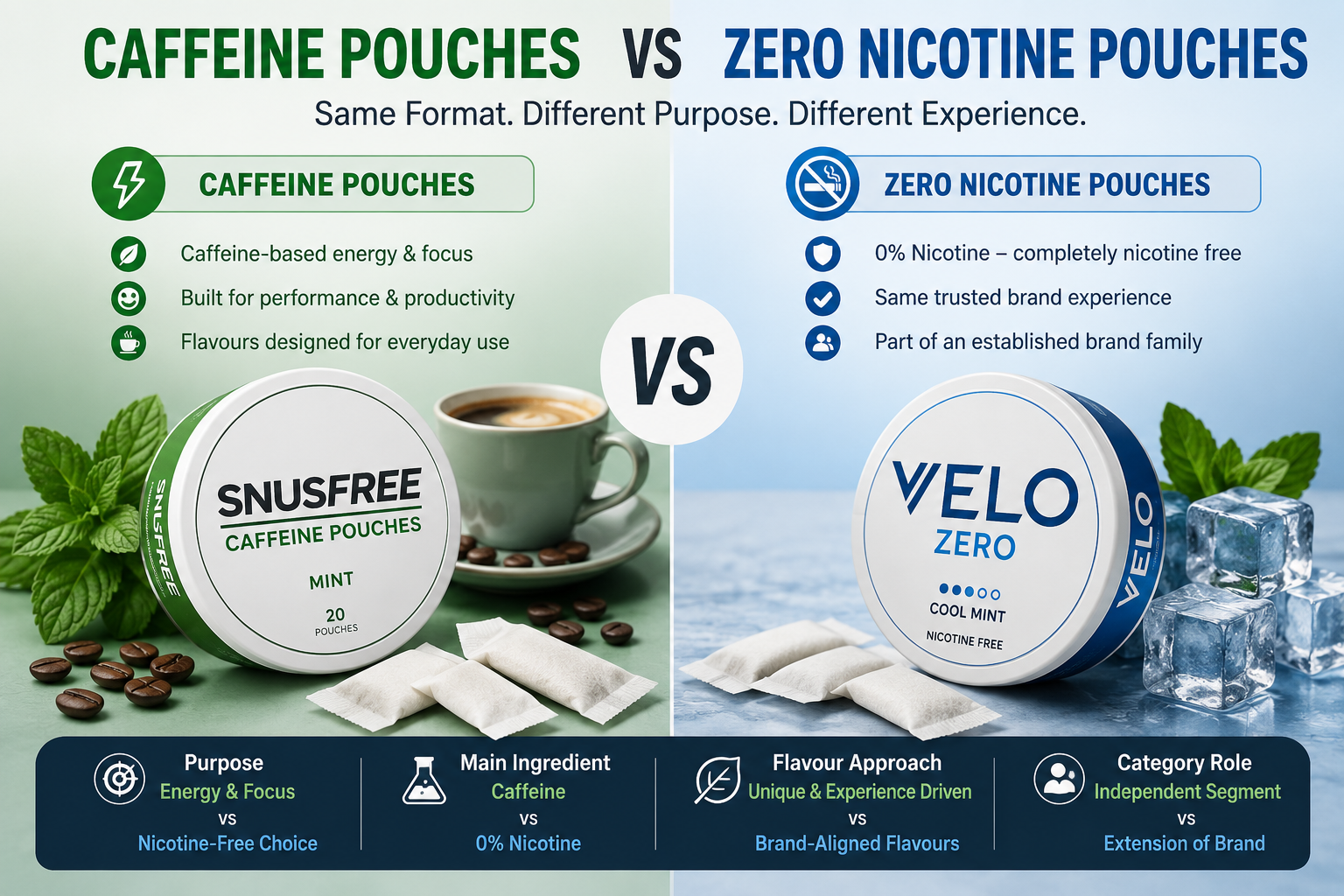
Should two nicotine free pouch formats automatically be treated as the same thing? When readers look at modern pouch products, it can be tempting to put everything into one simple box. However, caffeine pouches and zero nicotine formats often serve very different roles, follow different product logics, and attract different expectations, especially once flavours, naming and category layout are compared side by side.
Comparing nicotine free pouch ideas
At a surface glance, both caffeine pouches and zero nicotine lines are small white pouches placed under the lip, and both are described as nicotine free. That visual overlap can make them appear interchangeable in online menus or comparison charts. Yet the category labels, product descriptions and overall presentation tell a different story when examined more closely.
Collections presented as caffeine based are usually framed around function first and format second. For instance, ranges like Snusfree caffeine pouches are clearly described as caffeine products, with the pouch acting as the delivery style rather than the main feature. The naming highlights taste and experience, but the central theme remains caffeine, not simply “nicotine free”.
By contrast, zero nicotine lines tend to lean on existing brand identities from nicotine categories. The pouch style may look almost identical, yet the category heading emphasises that a familiar brand family now includes a nicotine free option. The focus moves away from “what is inside the pouch” and towards “how closely this line aligns with the rest of the brand universe”.
What caffeine pouch ranges prioritize
Caffeine pouch collections often build their structure around everyday preferences. Readers will notice flavour groups such as mint, coffee inspired tastes, or fruit styled notes, and sometimes separate sections based on intensity names rather than technical numbers. The navigation is designed to help shoppers compare experiences, not to mirror a nicotine catalogue.
Another less obvious point sits in how flavours are organised. In many caffeine pouch ranges, each flavour tends to stand alone with its own identity rather than being a mirror image of a nicotine line. A berry themed caffeine pouch is not necessarily paired with a matching nicotine product. The category feels like its own world, with flavours created for caffeine users first.
Brand communication also reflects this difference. When a company such as Snusfree describes its caffeine pouch offerings, the language usually centres on routine, taste and format. The message does not need to track a nicotine reference point, and this independence shapes how the products are presented. For readers comparing categories, this is an important cue that caffeine pouches are built as an independent segment, not just a reworked version of something else.
How zero nicotine lines differ
Zero nicotine pouch lines linked to established brands often follow a different logic. Here, the main task is to extend a known name into a nicotine free space while keeping the look and feel consistent. That is why a collection like VELO Zero typically mirrors the branding, flavour names and visual style already used in the wider VELO portfolio.
This creates a contrast with caffeine pouch categories in several subtle ways. Flavours in zero nicotine lines are often organised to echo the nicotine versions, using similar names, colour families or descriptive tags. The pouch format is framed as part of one continuous brand ladder, where nicotine choices and nicotine free choices sit next to each other under a shared label.
Category purpose also shifts. Caffeine pouches present a caffeine experience in pouch form, while zero nicotine formats like VELO Zero extend an existing oral pouch brand into a nicotine free corner without changing the underlying brand story. For readers who follow market trends, recognising this difference helps keep comparisons grounded. Not every nicotine free pouch belongs in the same mental category, and treating them as separate ideas allows for clearer expectations about how each format is positioned and why it exists.
