


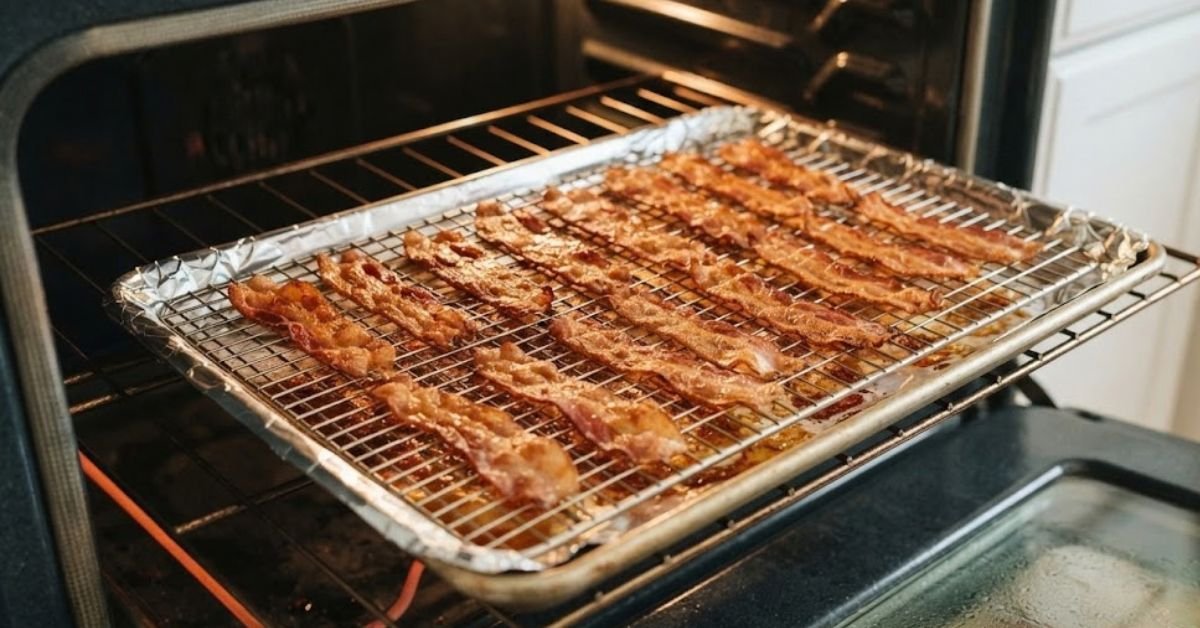
Cooking bacon in the oven is an easy way to prepare crisp, flavorful slices without standing over a hot frying pan. It allows the bacon to cook evenly, makes it easier to prepare several servings at once, and reduces the need to handle splattering grease. Whether you prefer thin bacon with a delicate crunch or thick-cut slices with a slightly chewy centre, a few simple techniques can help you get the results you want. Learning how to cook bacon in the oven also makes breakfast preparation more convenient because you can work on eggs, toast, pancakes, or other dishes while the bacon cooks.
Oven-baked bacon requires very little preparation. You generally need bacon, a rimmed baking sheet, and optionally some aluminium foil or parchment paper to simplify cleanup. The most important things to consider are the oven temperature, the thickness of the slices, and how crispy you want the finished bacon to be. Once you understand these basics, you can prepare bacon for breakfast, sandwiches, burgers, salads, and many other meals without relying on a frying pan.
Why Cook Bacon in the Oven?
One of the biggest advantages of baking bacon is that it provides a convenient way to prepare several slices together. When cooking bacon in a skillet, you may need to work in batches, especially when preparing breakfast for a family. A baking sheet gives you more room to arrange the slices in a single layer, allowing you to cook a larger quantity at once. This is particularly useful when preparing weekend breakfasts, brunches, or meals for guests.
Another advantage is that oven cooking requires less active attention. You do not need to stand beside the stove constantly flipping each slice or checking every few seconds for hot grease. Once the tray is in the oven, you can prepare the remaining parts of your meal while keeping an eye on the cooking progress. The bacon still needs monitoring because it can brown quickly near the end, but the process is generally easier to manage.
The oven also offers good control over the final texture. Bacon can become lightly browned and flexible or deeply golden and crisp, depending on the temperature, thickness, and cooking time. Although individual ovens produce different results, baking bacon on a flat tray makes it relatively easy to observe how the slices are progressing and remove them when they reach your preferred level of doneness.
What You Need to Cook Bacon in the Oven
You do not need special equipment or complicated ingredients to prepare oven-baked bacon. Regular pork bacon works well, and thick-cut or flavoured varieties can also be used with minor adjustments to the cooking time.
The basic equipment includes:
- Bacon slices of your preferred thickness
- A rimmed metal baking sheet
- Aluminium foil or oven-safe parchment paper, if desired
- Tongs for handling the cooked bacon
- Paper towels for absorbing excess grease
A rimmed baking sheet is important because bacon releases fat as it cooks. The raised edges help contain the rendered grease and reduce the risk of it spilling into the oven. Avoid using a completely flat tray without a rim.
Aluminium foil is useful when you want to make cleanup easier. You can carefully lift the cooled foil and dispose of the collected grease according to local waste guidance. Parchment paper is another option, provided it is rated for the oven temperature you intend to use. Always follow the manufacturer’s temperature limits and avoid allowing parchment paper to touch heating elements.
A wire rack placed over the baking sheet is optional. It raises the bacon above the rendered fat, which some cooks prefer when aiming for a particular texture. However, you can make excellent bacon directly on a lined baking sheet without using a rack.
What Temperature Is Best for Cooking Bacon in the Oven?
An oven temperature of 400°F (204°C) is a practical starting point for ordinary pork bacon. It is hot enough to render fat and brown the meat at a reasonable pace without requiring an unusually long cooking period. Many home cooks find this temperature convenient because it works well for regular-cut bacon and can also accommodate thicker slices with additional cooking time.
If you prefer to cook bacon at a lower temperature, 350°F (177°C) can work, although the process may take longer. A lower temperature can give you more time to monitor the bacon, but the final texture depends on the particular bacon and oven. At 425°F (218°C), bacon may cook more quickly, so closer attention is necessary to prevent the thinner edges from becoming overly dark.
For most home kitchens, starting at 400°F is a straightforward approach. The key is not to rely on temperature alone. Bacon thickness, fat content, pan material, oven calibration, and whether the oven is already preheated can all affect the result.
When preparing bacon for the first time with a particular oven, treat the suggested cooking time as an estimate rather than a guarantee. Once you have made a batch or two, you will have a better idea of how quickly your oven cooks bacon and when to begin checking for your preferred texture.
How to Cook Bacon in the Oven Step by Step
The process is simple, but a little attention to preparation makes a noticeable difference. Arranging the slices correctly and checking them before they become too dark will help you achieve more consistent results.
Step 1: Preheat the Oven
Set your oven to 400°F (204°C) and allow it to preheat. Starting with a preheated oven makes the cooking process easier to estimate because the bacon begins cooking at a more consistent temperature.
Some recipes use a cold-oven method, in which the bacon goes into the oven before it has heated fully. This can work, but the total cooking time becomes more dependent on how quickly your particular oven warms up. For a straightforward method with a more predictable starting point, preheating is a sensible choice.
Step 2: Prepare the Baking Sheet
Line a rimmed baking sheet with aluminium foil or suitable parchment paper if you want to simplify cleanup. If you are using a wire rack, place it securely over the sheet and make sure it is suitable for oven use.
There is generally no need to add cooking oil because bacon releases its own fat as it heats. Adding extra oil can make the finished bacon unnecessarily greasy and complicate cleanup.
Step 3: Arrange the Bacon Slices
Place the bacon strips in a single layer across the baking sheet. Try to leave a little space between the slices so that they are not overlapping. Overlapping pieces may cook unevenly, leaving some sections softer than others.
If you are preparing a large quantity, use a second baking sheet rather than forcing too many slices onto one tray. Giving each piece enough room makes it easier to monitor browning and remove individual slices if they finish at different times.
Step 4: Bake Until the Bacon Reaches Your Preferred Texture
Place the tray on the middle oven rack and begin checking the bacon after approximately 12 minutes. Many regular-cut slices take around 15–20 minutes at 400°F, but thinner slices may finish sooner and thick-cut bacon may need additional time.
Watch for the fat becoming translucent and rendering, while the meat gradually changes to a golden-brown colour. If you prefer softer bacon, remove it when it is cooked but still flexible. If you enjoy a crisp texture, allow it to brown further while checking frequently during the final few minutes.
Do not rely solely on a timer. The appearance of the bacon, its thickness, and the way your oven distributes heat all influence the finished result.
Step 5: Remove the Bacon Carefully
Use tongs to transfer the cooked slices to a plate lined with paper towels. The paper towels will absorb some of the surface grease, and the bacon will continue to firm up slightly as it cools.
Be careful when handling the baking sheet because the rendered fat will be extremely hot. Place the tray on a heat-resistant surface and keep children away from the oven and hot grease.
Step 6: Allow the Bacon to Rest
Give the bacon a minute or two to settle before serving. This brief resting period helps the slices become firmer, especially if you prefer a crisp finish.
Serve the bacon while warm for the best texture. It can be enjoyed on its own or added to sandwiches, salads, burgers, breakfast plates, and other dishes.
How Long Does It Take to Cook Bacon in the Oven?
The cooking time depends primarily on the thickness of the slices and the temperature of the oven. At 400°F, regular-cut bacon often takes approximately 15–20 minutes, while thick-cut bacon can require around 20–25 minutes or longer. These are general estimates, not fixed rules.
| Bacon type | Approximate time at 400°F |
|---|---|
| Thin-cut bacon | 10–15 minutes |
| Regular-cut bacon | 15–20 minutes |
| Thick-cut bacon | 20–25 minutes or longer |
| Turkey bacon | Follow package directions and check early |
These estimates assume a preheated oven and may vary with the brand, pan, quantity, and desired texture. Turkey bacon also behaves differently from pork bacon because its fat content and composition can vary considerably.
If you are preparing several trays at once, allow for differences in airflow and browning. You may need to rotate the trays or remove one before the other. Avoid opening the oven repeatedly, as doing so can lower the temperature and make the cooking time less predictable.
For the most reliable result, begin checking before the expected finish time and continue monitoring until the bacon reaches the appropriate doneness.
How to Make Oven-Baked Bacon Extra Crispy
Crispy bacon starts with proper spacing and careful timing. Arrange the slices in a single layer and avoid placing one strip over another. When pieces overlap, the covered sections may retain more moisture and fail to brown as evenly as the exposed areas.
The type of bacon matters as well. Thin-cut slices tend to become crisp more quickly, whereas thick-cut bacon often retains a meatier centre. If you enjoy bacon that snaps when bitten, choose thinner slices or allow the bacon to cook a little longer while watching it closely.
A wire rack can help by allowing rendered fat to drain away from the underside of the bacon. However, it is not essential. Cooking directly on a lined baking sheet can also produce crispy bacon, particularly when the strips have enough room and the oven temperature is appropriate.
Another useful technique is to transfer the bacon to paper towels as soon as it is ready. Leaving the slices in a pool of hot grease can make them feel heavier and greasier. Do not try to make the bacon extremely crisp by simply increasing the temperature without monitoring it, because the edges can burn before the thicker parts finish cooking.
Remember that bacon becomes firmer as it cools. If it already looks very dark and rigid in the oven, it may be overcooked by the time you serve it.
Should You Use Foil, Parchment Paper, or a Wire Rack?
Each method has its own advantages, and the best option depends on whether you prioritise cleanup, texture, or convenience.
Aluminium Foil
Foil makes cleanup straightforward because it collects the rendered fat and can be removed once the tray has cooled. It also helps protect the baking sheet from stubborn grease. Ensure the foil sits securely on the pan and does not interfere with the oven’s heating elements.
Parchment Paper
Parchment paper can help reduce sticking and make it easier to remove the bacon after cooking. Use only parchment suitable for the chosen oven temperature, and follow the manufacturer’s instructions. It should not extend toward an exposed heating element or be used beyond its stated temperature limit.
Wire Rack
A wire rack elevates the bacon above the collected grease. This can help the underside cook differently from bacon placed directly on a tray. The rack may also make some cleanup more involved because grease can stick to its individual bars.
No Liner or Rack
You can cook bacon directly on a clean, rimmed baking sheet. This method is simple and works well, although removing baked-on grease may require more cleaning afterward.
There is no single method that is best for every kitchen. For a beginner, a lined baking sheet is usually the easiest place to start.
Do You Need to Flip Bacon in the Oven?
In many cases, you do not need to flip bacon when baking it on a flat tray. The exposed surfaces brown as the fat renders, and the bacon can cook successfully without turning each slice individually.
However, ovens do not always distribute heat evenly. If you notice that the upper side is browning much faster than the underside, carefully turning the slices partway through cooking may help. A wire rack can also change how heat reaches the underside, so results may differ from those of bacon cooked directly on the pan.
If you decide to flip the bacon, use tongs and move carefully to avoid splashing hot fat. There is no need to turn it repeatedly. Checking the tray once during cooking is usually enough to determine whether any adjustment is necessary.
For most batches, arranging the slices in a single layer and monitoring their progress is more important than flipping them.
How to Cook Thick-Cut Bacon in the Oven
Thick-cut bacon contains more meat per slice and generally needs additional cooking time. It can become browned around the edges while remaining soft in the middle, which may be exactly what you want if you prefer a substantial bite rather than a thin, brittle slice.
Keep the oven at around 400°F and begin checking the bacon after approximately 18 minutes. Depending on the thickness and brand, it may need 20–25 minutes or longer. Extend the cooking time in small increments rather than leaving the tray unattended for a long period.
For crispier thick-cut bacon, allow more time for the fat to render while watching the surface colour. For a more flexible texture, remove it when the meat is cooked and the fat has rendered to your liking. Avoid overcrowding the pan because thick slices already require enough time to cook through properly.
Thick-cut bacon is particularly useful in breakfast sandwiches and burgers because it maintains a substantial texture. It can also be chopped after cooking and added to salads, baked potatoes, and other dishes.
How to Cook Turkey Bacon in the Oven
Turkey bacon can be prepared in the oven, but it does not always behave like traditional pork bacon. Depending on the product, it may contain less fat and may not release enough grease to brown in the same way. Some varieties are designed to become crisp, while others remain more flexible.
Check the packaging before cooking because products differ in preparation instructions and whether they are raw or ready to eat. Arrange the slices on a lined baking sheet and use the temperature and timing recommended by the manufacturer. If no specific directions are available, monitor the bacon closely and adjust the time based on its thickness and texture.
Avoid assuming that turkey bacon needs exactly the same cooking time as pork bacon. Its appearance can also differ, so colour alone may not reliably indicate whether a raw product has reached a safe temperature. Follow the product’s safety instructions.
Turkey bacon can be served with eggs, toast, breakfast wraps, or sandwiches. It is also useful for recipes that call for bacon strips, although its flavour and texture may differ from those of pork bacon.
Common Mistakes to Avoid When Baking Bacon
One common mistake is overlapping the slices. When the bacon is crowded, the covered areas may not brown properly, leaving a mixture of soft and crisp sections. Using a larger tray or cooking in batches can solve this problem.
Another mistake is setting the oven temperature too high and assuming that faster cooking will produce better bacon. Excessive heat can cause thin edges to burn while thicker areas are still cooking. A moderate, consistent temperature gives you more control over the result.
Some cooks also leave the bacon in the oven until it looks completely rigid. This can lead to overcooking because the slices become firmer after being removed from the heat. It is better to take the tray out when the bacon has reached your preferred level of doneness, allowing for a little additional firming as it cools.
Forgetting about the hot grease is another avoidable problem. Rendered bacon fat can cause burns, and spilling it while carrying a tray can be dangerous. Use oven mitts, keep the tray level, and allow the fat to cool before disposing of it.
Finally, avoid pouring hot grease into a sink drain. Fat can cool and solidify in plumbing, potentially causing blockages. Let it cool safely and dispose of it according to local waste guidance.
How to Store and Reheat Cooked Bacon
If you have leftover bacon, allow it to cool briefly and refrigerate it promptly in a clean, airtight container. Cooked bacon should generally be refrigerated within two hours, or within one hour when the surrounding temperature is above 90°F (32°C). Refrigeration helps slow bacterial growth and keeps the bacon suitable for later use.
For best quality, use refrigerated cooked bacon within three to four days. If you need to keep it longer, freezing is an option. Separate the slices with suitable food-safe material if necessary to make individual portions easier to remove later.
To reheat bacon, place the slices on a baking sheet and warm them in a moderate oven until heated through. The time will depend on the thickness and whether the bacon is refrigerated or frozen. You can also use a microwave with a suitable plate and paper towels, checking frequently to avoid overcooking.
Reheated bacon may not have exactly the same texture as freshly cooked slices, but an oven can help restore some crispness. Only reheat the portion you intend to eat, and avoid repeatedly cooling and reheating the same batch.
Delicious Ways to Serve Oven-Baked Bacon
Oven-baked bacon is versatile enough to use in breakfast, lunch, dinner, and snacks. Its salty, savoury flavour pairs well with eggs, potatoes, bread, vegetables, and creamy sauces.
For breakfast, serve the slices with scrambled eggs, toast, pancakes, or roasted potatoes. You can also place bacon in a breakfast sandwich with eggs and cheese, or chop it into an omelette for extra flavour.
At lunchtime, use it in a BLT sandwich with lettuce and tomato. Crisp bacon also works well in burgers, wraps, and grilled sandwiches. If you prefer something lighter, crumble a small amount over a salad with tomatoes, avocado, or roasted vegetables.
Bacon can add flavour to baked potatoes, pasta dishes, soups, and casseroles. Cooked pieces can be prepared ahead and added near the end of cooking when you want to retain some texture. Because bacon is salty, taste the dish before adding extra salt.
When serving bacon with other foods, prepare the rest of the meal while the bacon cooks. This makes the oven method particularly convenient for busy mornings or when feeding several people.
FAQs
What is the best temperature for cooking bacon in the oven?
A temperature of 400°F (204°C) is a practical starting point for most regular-cut pork bacon. Adjust the cooking time according to the thickness and desired crispness.
How long should bacon cook in the oven?
Regular-cut bacon often takes around 15–20 minutes at 400°F. Thin slices may finish sooner, while thick-cut bacon can take 20–25 minutes or longer.
Do you need to flip bacon while it is baking?
Usually, flipping is unnecessary when the slices are arranged in a single layer. Turn them if your oven cooks unevenly or the undersides need additional browning.
Is it better to cook bacon on foil or parchment paper?
Both can make cleanup easier and help prevent sticking. Use materials suitable for the oven temperature, and follow the manufacturer’s safety instructions.
How do you keep oven-baked bacon crispy?
Arrange the slices without overlapping and monitor them closely near the end of cooking. Transfer the finished bacon to paper towels to absorb excess grease.
Conclusion
Learning how to cook bacon in the oven is a practical way to prepare a favourite breakfast ingredient with less hands-on effort. With a rimmed baking sheet, a suitable oven temperature, and a little attention to cooking time, you can prepare bacon that suits your preference, whether you enjoy lightly browned slices or a crisp finish.
The key is to arrange the bacon in a single layer, allow enough room between the slices, and check its progress instead of relying entirely on a timer. Regular-cut bacon often takes around 15–20 minutes at 400°F, while thicker slices generally require more time. Simple choices such as using foil for cleanup, transferring cooked bacon to paper towels, and storing leftovers correctly can make the whole process easier.
Once you become familiar with your oven and the type of bacon you buy, preparing it this way can become a dependable part of your cooking routine. From breakfast plates and sandwiches to salads and burgers, oven-baked bacon offers a flexible option for many meals. dailyverge
