


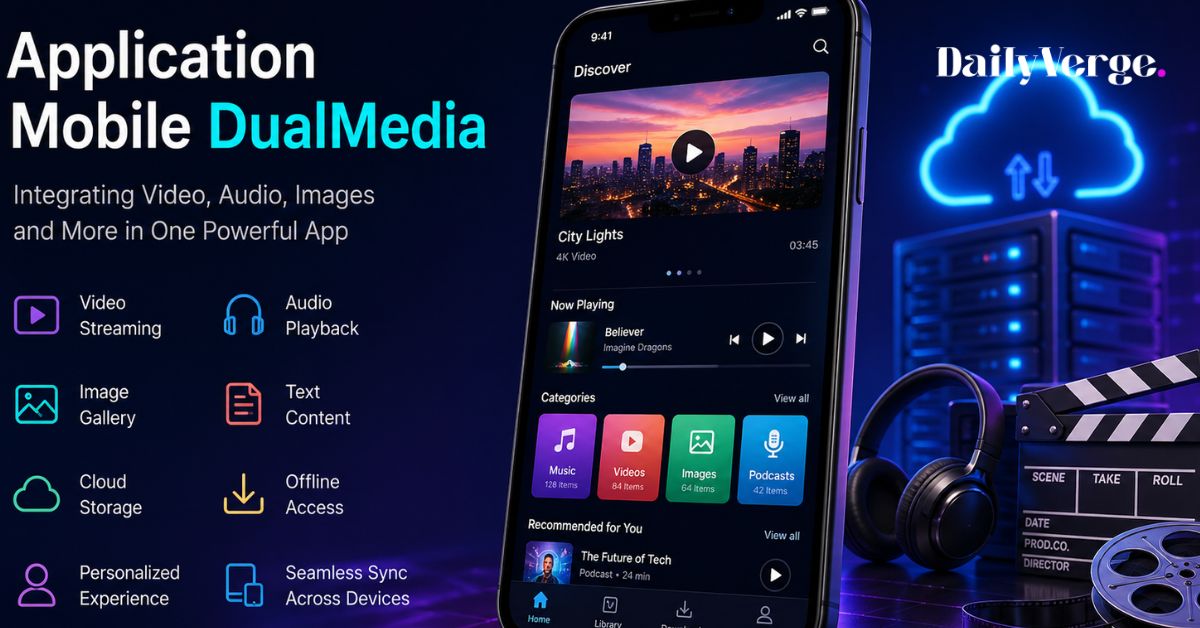
Modern smartphones have changed the way people communicate, learn, work, and enjoy entertainment. Today’s users expect far more than a simple application with basic functions. They want apps that combine videos, music, images, documents, live streaming, and interactive features in one convenient place.
This growing demand has led to the rise of application mobile dualmedia, a concept that focuses on bringing multiple forms of digital media together inside a single mobile application. Rather than switching between several apps to complete different tasks, users can access everything through one streamlined platform.
Whether it’s an online learning platform with video lessons and downloadable notes, a business app with training videos and presentations, or a media platform offering music, podcasts, and live broadcasts, multimedia integration has become a key feature of modern mobile experiences.
In this guide, you’ll learn what application mobile dualmedia means, how it works, its major features, benefits, development process, real-world applications, challenges, and the technologies that make these advanced mobile applications possible.
What Is Application Mobile DualMedia?
The term application mobile dualmedia generally refers to a mobile application that integrates two or more types of digital media into one platform. Instead of handling only text or images, these applications combine content such as:
- Video
- Audio
- Images
- Documents
- Interactive graphics
- Live streaming
- Animations
The goal is to provide users with a richer, more engaging experience without requiring them to switch between multiple applications.
For example, an educational app may include recorded lectures, written notes, quizzes, downloadable PDFs, and live classes within one interface. Likewise, a business communication app may combine video meetings, file sharing, voice messaging, and presentations into a unified workspace.
This integrated approach improves convenience, saves time, and creates a smoother digital experience.
Why Multimedia Mobile Applications Are Growing in Popularity
Mobile users spend more time consuming multimedia content than ever before. Streaming services, online education, remote work, and social media have all increased the demand for applications capable of handling multiple content formats efficiently.
Several factors are driving this trend:
- Faster internet connections through 5G and Wi-Fi 6
- Improved smartphone hardware
- Larger device storage
- Better cloud computing services
- Growing demand for digital learning
- Increased popularity of video content
- Remote work and virtual collaboration
Businesses are also realizing that multimedia applications help improve customer engagement by making content more interactive and accessible.
How Application Mobile DualMedia Works
Unlike traditional mobile apps that focus on a single function, multimedia applications use several technologies working together behind the scenes.
A typical dualmedia application includes multiple components:
Front-End Interface
The front end provides the user interface where people browse videos, read articles, listen to audio, or interact with multimedia content.
A clean and responsive design ensures users can easily switch between different media types without confusion.
Backend Infrastructure
The backend manages:
- User accounts
- Authentication
- Databases
- Content management
- Notifications
- Cloud synchronization
- Security
This allows content to remain organized while delivering information quickly to users.
Media Processing
Large multimedia files require efficient processing.
Modern applications use:
- Video compression
- Audio optimization
- Adaptive streaming
- Image optimization
- Content delivery networks (CDNs)
These technologies reduce loading times while maintaining high-quality media.
Cloud Storage
Cloud platforms allow users to:
- Save files securely
- Sync content across multiple devices
- Access data anywhere
- Recover information if devices are replaced
Cloud integration has become a standard feature in multimedia applications.
Key Features of Application Mobile DualMedia
Every multimedia mobile application is unique, but most include several core features that improve usability and performance.
Multi-Format Media Support
The biggest advantage is support for different content formats, including:
- Videos
- Music
- Podcasts
- Images
- PDFs
- Presentations
- Live streams
Users no longer need separate applications for each type of content.
Real-Time Streaming
Many applications provide instant access to:
- Live events
- Video conferences
- Sports broadcasts
- Online classes
- Webinars
Adaptive streaming technology automatically adjusts video quality according to internet speed.
Offline Access
A valuable feature is offline functionality.
Users can download:
- Videos
- Audio files
- Documents
- Training materials
This is particularly useful while traveling or when internet connectivity is limited.
Cloud Synchronization
Cloud synchronization keeps information updated across devices.
For example, a user who watches half of a training video on a smartphone can continue watching from the same point on a tablet or laptop.
Personalized Recommendations
Artificial intelligence is increasingly used to recommend relevant content based on:
- Viewing history
- Search behavior
- User interests
- Previous interactions
Personalization helps users discover content more quickly.
Push Notifications
Push notifications inform users about:
- New uploads
- Live events
- Course updates
- Messages
- Promotions
- System alerts
Properly used notifications improve engagement without overwhelming users.
Secure User Authentication
Modern applications protect user information through:
- Multi-factor authentication
- Biometric login
- Encrypted data transmission
- Secure cloud storage
Security has become essential as multimedia platforms handle increasing amounts of personal information.
Benefits of Application Mobile DualMedia
The popularity of multimedia applications continues to grow because they provide advantages for both users and businesses.
Better User Experience
Having different media types available within one application creates a smoother and more enjoyable experience.
Users spend less time switching between apps and more time engaging with content.
Higher User Engagement
Interactive media naturally captures more attention than plain text alone.
Combining videos, audio, graphics, and interactive tools encourages users to stay longer and return more frequently.
Increased Productivity
Businesses and professionals benefit from having communication, documents, presentations, and multimedia resources accessible in one platform.
This reduces workflow interruptions and improves collaboration.
Cost Efficiency
Instead of developing separate applications for video, audio, messaging, and file sharing, organizations can combine these functions into one comprehensive solution.
Maintenance and updates also become easier over time.
Improved Accessibility
Modern multimedia applications often include accessibility features such as:
- Closed captions
- Audio descriptions
- Screen reader compatibility
- Adjustable font sizes
- Voice navigation
These improvements make applications more inclusive for diverse audiences.
Stronger Brand Engagement
Businesses can create richer customer experiences by combining educational content, promotional videos, interactive tutorials, and customer support within a single mobile application.
As a result, users often develop stronger relationships with the brand.
Technologies Behind Application Mobile DualMedia
Creating a high-performance multimedia application requires a combination of modern software development technologies.
Some of the most commonly used technologies include:
Cross-Platform Development Frameworks
Frameworks like Flutter and React Native enable developers to build applications that run on both Android and iOS using a shared codebase.
This reduces development time while maintaining consistent functionality across devices.
Cloud Computing
Cloud infrastructure provides scalable storage, secure backups, and faster content delivery while reducing the burden on users’ devices.
Content Delivery Networks (CDNs)
CDNs distribute multimedia content across servers located in different regions.
This improves loading speed and reduces buffering during video and audio playback.
Artificial Intelligence
AI is increasingly used for:
- Personalized recommendations
- Voice recognition
- Smart search
- Automatic subtitles
- Image recognition
- Chatbots
These intelligent features enhance user satisfaction and improve overall application performance.
Database Management
Reliable databases ensure user information, media files, preferences, and activity history remain secure and easily accessible.
Proper database optimization also supports faster search results and smoother navigation.mmersive digital experiences across mobile platforms.
Read more. technology guides and helpful insights on our website.
