


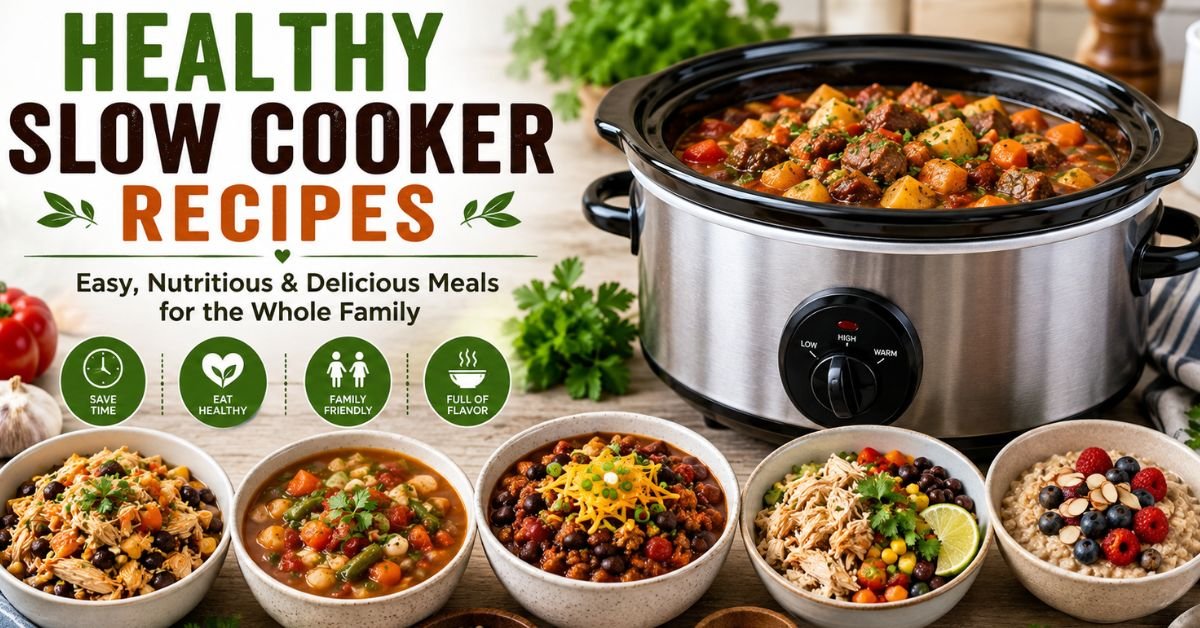
Finding time to prepare a satisfying homemade meal can be difficult when work, family responsibilities, and everyday errands fill the day. That is one reason slow cookers remain useful in modern kitchens. With the right ingredients, you can prepare a balanced meal in the morning and return later to a dinner that is ready to serve. The best healthy slow cooker recipes combine lean proteins, vegetables, beans, whole grains, herbs, and flavorful sauces without depending heavily on excess salt, sugar, or saturated fat.
A slow cooker is also more versatile than many people realize. It can be used for soups, stews, chili, shredded chicken, lean beef dishes, vegetarian meals, breakfast recipes, and meal-prep staples. The cooking method is particularly helpful for ingredients such as beans, lentils, tougher cuts of meat, and root vegetables because gentle, extended cooking allows flavors to develop while many ingredients become tender.
The key is understanding what makes a slow-cooked meal nutritious. A recipe does not automatically become healthy simply because it was prepared in a crockpot. The ingredients, portion sizes, cooking liquids, sauces, and overall balance of the meal matter. Once those factors are considered, a slow cooker can become an excellent tool for preparing convenient homemade food.
What Makes a Slow Cooker Meal Healthy?
A nutritious slow cooker meal usually starts with a sensible combination of protein, vegetables, fiber-rich carbohydrates, and flavorful ingredients. Lean chicken, turkey, beans, lentils, fish where appropriate, and lean cuts of beef can provide protein, while vegetables add vitamins, minerals, fiber, and volume.
The cooking liquid also deserves attention. Commercial sauces, canned soups, seasoning mixes, and prepared gravies can sometimes contain substantial amounts of sodium or added sugar. Using low-sodium broth, crushed tomatoes, herbs, garlic, onion, ginger, paprika, cumin, black pepper, and other spices can provide plenty of flavor without making the meal overly salty.
Portion size matters as well. Even nutritious foods can contribute more calories than intended when large quantities of cheese, cream, oil, or high-calorie sauces are added. A balanced slow cooker meal should leave room for vegetables and other nutrient-dense ingredients rather than making meat, cheese, or creamy sauces the entire focus of the dish.
Healthy Slow Cooker Recipes for Busy Weeknights
Busy weeknights are where slow cooking can be particularly practical. Instead of spending an hour preparing dinner after work, you can assemble ingredients earlier in the day and allow the cooker to handle most of the cooking process.
Chicken, beans, tomatoes, onions, peppers, carrots, and spices can be combined in countless ways. A simple chicken and black bean dish, for example, can later be served with brown rice, whole-grain tortillas, or a large salad. Another option is a vegetable-rich chicken soup that can be prepared in a large batch and enjoyed over several meals.
For genuinely easy healthy crockpot recipes, look for recipes with straightforward preparation. Chopping a few vegetables, measuring spices, and adding the main ingredients should be enough. Recipes that require several separate cooking stages may defeat some of the convenience that makes a slow cooker attractive in the first place.
Healthy Slow Cooker Chicken Recipes
Chicken is one of the easiest proteins to adapt to slow cooking. Boneless, skinless chicken breast works well when paired with enough moisture and flavorful ingredients. Chicken thighs can also be useful because they tend to remain tender during longer cooking, although they generally contain more fat than skinless breast meat.
One simple combination is chicken breast with tomatoes, onions, bell peppers, garlic, and herbs. After cooking, the chicken can be shredded and served over a grain, tucked into whole-grain wraps, or paired with roasted or steamed vegetables.
Other healthy slow cooker chicken recipes can use salsa, black beans, corn, tomatoes, or mild spices to create a Mexican-inspired meal. A lemon-and-herb chicken dish offers a completely different flavor profile, while chicken with mushrooms and herbs can create a comforting dinner without relying on a heavy cream sauce.
Healthy Slow Cooker Recipes With Chicken Breast
Chicken breast is particularly popular among people who want a lean source of protein. However, it can become dry when overcooked, so moisture and cooking time are important.
A useful approach is to combine chicken breast with ingredients such as tomatoes, broth, salsa, onions, mushrooms, or vegetables that release moisture during cooking. The finished chicken can then be shredded or sliced and used in several meals.
This also makes chicken breast useful for meal preparation. Cooked chicken can become the foundation for salads, grain bowls, wraps, soups, and quick dinners during the week. Keeping the seasoning relatively versatile makes it easier to use the same batch in different meals instead of eating an identical plate every day.
Healthy Slow Cooker Beef Recipes
Beef can also fit into a nutritious slow-cooker meal when the cut and portion are chosen carefully. Leaner cuts can provide protein and important nutrients while keeping the meal from becoming unnecessarily heavy.
Beef and vegetable stew is a classic example. Carrots, celery, onions, mushrooms, tomatoes, and other vegetables can add fiber and nutrients while also creating a flavorful cooking base. Potatoes can be included in moderate portions, or they can be replaced or supplemented with other vegetables depending on dietary preferences.
The important distinction is that a healthy beef dish does not need to eliminate beef completely. Instead, it can balance the meat with plenty of vegetables and use a flavorful broth rather than a very rich, high-fat sauce.
Healthy Slow Cooker Vegetarian Recipes
Vegetarian cooking is especially well suited to slow cookers because beans, lentils, chickpeas, and sturdy vegetables can develop excellent flavor during longer cooking.
Lentil stew is one practical option. Lentils provide plant-based protein and fiber while absorbing the flavors of tomatoes, onions, garlic, herbs, and spices. A three-bean chili can provide another filling meal without requiring meat.
Sweet potatoes, carrots, squash, mushrooms, spinach, tomatoes, cauliflower, and bell peppers can all be incorporated into vegetarian slow-cooker dishes. Combining several vegetables with beans or lentils creates a meal that is more substantial than a simple vegetable soup.
Vegetarian recipes can also be economical. Dried or canned beans, lentils, seasonal vegetables, and basic pantry spices are often less expensive than large quantities of meat, making these meals useful for households trying to manage grocery costs.
Healthy Slow Cooker Meals for Families
Family meals can be challenging because different people may have different preferences. A useful strategy is to prepare a flavorful base and allow everyone to customize the finished meal.
For example, slow-cooked shredded chicken can be served with rice, lettuce, tomatoes, avocado, beans, salsa, or whole-grain tortillas. Family members can assemble their own bowls according to their preferences.
Chili is another flexible choice. A pot containing lean ground turkey or beef, beans, tomatoes, peppers, onions, and spices can feed several people. Instead of loading each serving with cheese and sour cream, toppings can be offered separately so everyone controls their portion.
The same principle works for soups and stews. Serve the main dish with a simple salad, steamed vegetables, or a modest serving of whole-grain bread to create a more balanced family dinner.
Healthy Slow Cooker Recipes for Weight Loss
Slow cooker meals can be included in a weight-management eating pattern, but no cooking method automatically causes weight loss. Weight management depends on overall energy intake, food choices, activity, portions, and individual needs.
When preparing healthy slow cooker recipes for weight loss, focus on foods that provide plenty of nutrition and satiety without excessive calories. Lean protein, vegetables, beans, lentils, and broth-based dishes are useful choices.
Vegetables can make a meal feel more substantial because they add volume and fiber. Protein can also help make meals more satisfying. Instead of building a dish around large amounts of cheese, cream, butter, or sugary sauces, use herbs, spices, tomatoes, garlic, onions, and citrus-based flavors.
It is also worth paying attention to what accompanies the main dish. A nutritious stew can become a much higher-calorie meal if it is served with very large portions of buttered bread, creamy sides, or other calorie-dense additions.
Healthy Slow Cooker Recipes High Protein
Protein is an important part of a balanced diet, and slow cookers make it easy to prepare protein-rich meals in batches. Chicken, turkey, lean beef, beans, lentils, and chickpeas can all play a role.
A high-protein slow cooker meal does not have to contain a huge portion of meat. Combining a moderate serving of lean meat with beans can increase the overall protein and fiber content while adding texture and flavor.
For example, chicken and black beans work well together in a tomato-based dish. Turkey chili can combine lean ground turkey with kidney beans and black beans. A lentil and vegetable stew can provide substantial plant-based protein while remaining inexpensive and filling.
If a recipe uses a creamy ingredient, consider whether it is actually necessary. Sometimes Greek yogurt, blended beans, pureed vegetables, or a small amount of another flavorful ingredient can provide richness without making the entire dish heavy.
Healthy Slow Cooker Recipes Low Calorie
Low-calorie meals are easier to create when vegetables and lean proteins form the foundation. Broth-based soups, vegetable-heavy stews, chicken soups, and bean-based dishes can be satisfying without requiring large quantities of added fat.
For a low-calorie slow cooker meal, start with ingredients such as carrots, celery, tomatoes, cabbage, zucchini, mushrooms, spinach, onions, peppers, and lean protein. Season them generously with herbs and spices so the dish does not depend on large amounts of oil or cheese for flavor.
Remember that “low calorie” does not necessarily mean “better.” A meal still needs enough protein, fiber, vitamins, minerals, and other nutrients to be worthwhile. A very small meal may leave you hungry shortly afterward, making it less practical in the long run.
Healthy Slow Cooker Recipes Low Carb
People following a lower-carbohydrate eating pattern can adapt many slow cooker meals by focusing on protein, non-starchy vegetables, and flavorful sauces without added sugar.
Chicken with mushrooms and spinach is one possibility. Another is beef with cabbage, peppers, and mushrooms. A tomato-based chicken dish can also work when served with vegetables rather than rice or pasta.
Beans and lentils contain carbohydrates, but they also provide fiber and protein, so whether they fit a particular low-carb plan depends on the person’s dietary goals.
Cauliflower, zucchini, cabbage, broccoli, spinach, mushrooms, green beans, and bell peppers can help add variety while keeping the meal centered on vegetables.
Healthy Slow Cooker Recipes With Vegetables
Vegetables should not be treated as an afterthought. They can be one of the main components of a slow cooker meal.
Root vegetables such as carrots and sweet potatoes tend to hold up well during longer cooking. Mushrooms, onions, peppers, celery, tomatoes, cabbage, and beans can also contribute texture and flavor.
Leafy greens such as spinach may be better added toward the end of cooking rather than several hours earlier. This helps preserve their texture and prevents them from becoming excessively soft.
A useful way to build a meal is to choose one protein, several vegetables, one flavorful cooking liquid, and a combination of herbs or spices. This simple framework can produce dozens of different meals without requiring a completely new recipe every time.
Healthy Crockpot Recipes for Beginners
Beginners often make the mistake of thinking that slow cooking means adding absolutely anything to the pot and leaving it all day. In reality, ingredient selection and timing still matter.
Start with straightforward dishes such as chicken soup, turkey chili, vegetable stew, or shredded chicken. These recipes are forgiving and do not require advanced cooking techniques.
Avoid repeatedly opening the lid during cooking unless the recipe specifically calls for it. Removing the lid releases heat and moisture, which can affect cooking time.
It is also important not to fill the cooker beyond the manufacturer’s recommended capacity. Overfilling can interfere with proper cooking, while using too little food may affect how efficiently the appliance operates.
Healthy Dump and Go Slow Cooker Recipes
Dump-and-go meals are designed around convenience. The idea is simple: prepare the ingredients, place them into the cooker, season them, and let the slow cooker do most of the work.
Chicken salsa bowls, bean chili, lentil soup, vegetable stew, and tomato-based chicken dishes can all be adapted into this format.
The best recipes for this approach use ingredients that tolerate longer cooking. Tough vegetables, beans, and suitable cuts of meat can work particularly well. More delicate ingredients may need to be added later.
Dump-and-go cooking can also make homemade meals more realistic for people who normally rely on takeout because they do not have enough time to cook from scratch every evening.
Healthy Slow Cooker Recipes With Few Ingredients
A long ingredient list is not required to make a flavorful meal. Some of the most practical recipes rely on a small number of well-chosen ingredients.
Chicken, salsa, beans, and vegetables can create a simple meal with very little preparation. Lentils, tomatoes, onions, carrots, and spices can form the foundation of a hearty vegetarian soup.
When using fewer ingredients, seasoning becomes more important. Garlic, onion, cumin, smoked paprika, oregano, thyme, rosemary, black pepper, ginger, chili powder, and fresh herbs can dramatically change the character of a dish.
The goal is not to use as few ingredients as possible. Instead, choose ingredients that each serve a purpose, whether they contribute protein, fiber, flavor, texture, moisture, or nutrients.
Healthy Slow Cooker Recipes for Dinner
Dinner is where many households can benefit most from slow cooking. A complete meal can often be prepared in one pot, reducing both preparation time and the number of dishes that need to be washed afterward.
Chicken stew, turkey chili, beef and vegetable stew, lentil curry, black bean soup, and vegetable-heavy tomato dishes can all work well for dinner.
For a balanced plate, consider adding a simple side rather than making the main dish unnecessarily complicated. A green salad, steamed vegetables, brown rice, quinoa, or a modest serving of whole-grain bread can complement many slow-cooked meals.
Dinner can also be the perfect opportunity to cook enough for leftovers. A large batch prepared once can provide lunches or another dinner later in the week.
Healthy Slow Cooker Soups
Soup is one of the easiest slow-cooker categories to adapt for nutritious eating. Broth, vegetables, beans, lentils, chicken, turkey, and herbs can create filling combinations.
Chicken vegetable soup is a classic choice. Lentil soup offers a plant-based alternative, while bean and tomato soup provides both fiber and protein.
Soups can also be customized according to the season. Root vegetables and hearty greens can make winter soups more substantial, while tomatoes, zucchini, peppers, and herbs can create lighter combinations.
Be mindful of sodium when using packaged broth or canned ingredients. Low-sodium versions can give you greater control over the final seasoning.
Healthy Slow Cooker Stews
Stews are particularly suitable for slow cooking because the extended cooking process can soften vegetables and tenderize suitable cuts of meat.
A traditional beef stew can be made more vegetable-focused by increasing the amount of carrots, celery, mushrooms, onions, and other produce. Chicken stew can use lean chicken, tomatoes, herbs, and root vegetables.
Vegetarian stews can be built around lentils, chickpeas, beans, mushrooms, sweet potatoes, or squash.
The cooking liquid should complement the ingredients rather than overwhelm them. A tomato or broth-based sauce can provide plenty of flavor without requiring a heavy cream base.
Healthy Slow Cooker Chili
Chili is one of the most adaptable slow cooker meals. It can be made with lean beef, turkey, chicken, beans, or entirely plant-based ingredients.
A balanced chili might contain tomatoes, onions, peppers, beans, lean protein, garlic, cumin, chili powder, and paprika. Additional vegetables can be included without changing the basic character of the dish.
For a lighter serving, use moderate amounts of cheese and sour cream as toppings rather than mixing large quantities into the entire pot. Fresh cilantro, chopped onions, tomatoes, avocado, or a spoonful of plain yogurt can provide additional flavor.
Chili is also ideal for batch cooking because the flavor often develops further after the dish rests and is reheated.
Healthy Slow Cooker Breakfast Recipes
Slow cookers are not limited to lunch and dinner. They can also be used for breakfast dishes such as oatmeal, steel-cut oats, breakfast casseroles, and certain fruit-and-grain combinations.
Steel-cut oats can be combined with milk or an appropriate alternative, cinnamon, fruit, nuts, and seeds. Rather than relying heavily on refined sugar, natural sweetness can come from berries, apples, bananas, or a small amount of another preferred sweetener.
Breakfast casseroles can combine eggs with vegetables and lean protein. Spinach, mushrooms, peppers, onions, and turkey can create a filling morning meal.
Because breakfast recipes may require different cooking approaches from soups and stews, always follow the specific recipe’s instructions regarding timing, liquid quantities, and ingredient placement.
How to Make Slow Cooker Meals More Nutritious
Small ingredient changes can significantly improve an everyday recipe. Start by increasing vegetables where practical. Then consider whether the protein source can be made leaner and whether a high-sodium sauce can be replaced with herbs, spices, tomatoes, or a lower-sodium alternative.
Fiber is another useful consideration. Beans, lentils, vegetables, whole grains, and certain seeds can help increase the fiber content of a meal.
You can also control toppings separately. Instead of automatically adding large amounts of cheese or creamy sauces, serve them at the table in smaller portions.
Fresh herbs, lemon juice, lime juice, garlic, ginger, vinegar, and spices can make food taste more interesting without requiring excessive amounts of salt or fat.
Common Mistakes to Avoid
One common mistake is assuming that every ingredient should cook for the same amount of time. Some vegetables and delicate ingredients may be better added later.
Another mistake is using too much liquid. Slow cookers retain moisture, so a recipe designed for stovetop cooking may not require the same amount of liquid when adapted for a slow cooker.
Overfilling is another issue. Follow the appliance manufacturer’s guidance rather than filling the pot to the very top.
It is also worth avoiding excessive reliance on processed sauces. A recipe can start with nutritious ingredients and become much less balanced when large amounts of sugary or salty prepared sauces are added.
Finally, do not treat slow cooking as a substitute for food-safety practices. Raw ingredients should be handled appropriately, and cooked food should reach safe internal temperatures.
Slow Cooker Food Safety Tips
Safe preparation is just as important as nutrition. Keep perishable ingredients refrigerated until you are ready to use them, and avoid leaving raw meat or other perishable foods sitting at room temperature for extended periods.
Use a food thermometer when necessary to confirm that meat and poultry have reached a safe internal temperature. Poultry should reach 165°F, while ground meats such as beef, pork, lamb, and veal should reach 160°F. Whole cuts of beef, pork, lamb, and veal should reach 145°F followed by a three-minute rest.
Leftovers should be refrigerated promptly in suitable containers rather than remaining at room temperature for hours. Proper storage helps reduce the risk of foodborne illness and also makes meal preparation more convenient during the week.
Always follow the manufacturer’s instructions for your particular slow cooker because appliances can vary in size, design, and performance.
How to Store Slow Cooker Leftovers
Batch cooking becomes much more useful when leftovers are stored properly. Divide large amounts of food into smaller portions so they can cool and refrigerate more efficiently.
Use clean, covered containers and label them when necessary so older portions are eaten first. Soups, stews, chili, and shredded chicken can often be portioned into individual containers for lunches or future dinners.
If you plan to freeze a meal, allow it to cool appropriately before transferring it to freezer-safe containers. Leave enough space for expansion when freezing liquids.
Having prepared portions available can make it much easier to choose a homemade meal on busy days rather than ordering takeout.
FAQs
Are slow cooker meals good for healthy eating?
Yes. Meals based on lean protein, vegetables, beans, lentils, and whole grains can fit well into a balanced diet. The ingredients and portions determine the nutritional quality.
Can slow cooker meals help with weight management?
They can be part of a weight-management eating pattern. Choose filling ingredients, control portions, and limit excessive amounts of high-calorie sauces, cheese, and added fats.
What are good slow cooker meals for beginners?
Chicken soup, vegetable soup, turkey chili, lentil stew, and simple shredded chicken are good starting points. They generally use straightforward ingredients and require limited preparation.
Can I prepare slow cooker meals for the whole family?
Yes. Soups, stews, chili, chicken dishes, and bean-based meals can be prepared in larger quantities. Serving toppings and side dishes separately also makes customization easier.
Can slow cooker recipes be used for meal prep?
Absolutely. Soups, chili, stews, shredded chicken, beans, and lentil dishes are especially practical for batch cooking. Divide portions into appropriate containers for later meals.
Conclusion
A slow cooker can make nutritious home cooking considerably easier, especially when time is limited. The most successful approach is not to search for a magical cooking method but to build meals around quality ingredients. Lean proteins, vegetables, beans, lentils, whole grains, herbs, and spices provide a strong foundation for satisfying dishes.
The variety available is another major advantage. From chicken and beef dishes to vegetarian stews, soups, chili, breakfast oatmeal, and meal-prep bowls, there are plenty of ways to keep a weekly menu interesting. You can also adjust recipes to suit different preferences, whether your priority is more protein, fewer calories, lower carbohydrates, or simply getting more vegetables into your diet.
Ultimately, healthy cooking comes down to the choices made before the slow cooker is switched on. Choose balanced ingredients, pay attention to portions, control sodium and added sugar, and handle food safely. With those principles in place, slow cooking can become a practical part of a nutritious and enjoyable everyday eating routine.
When discussing flavorful family meals, add: Good Mexican Food Near Me: How to Find Authentic Flavours and the Best Dishes to Try.
