


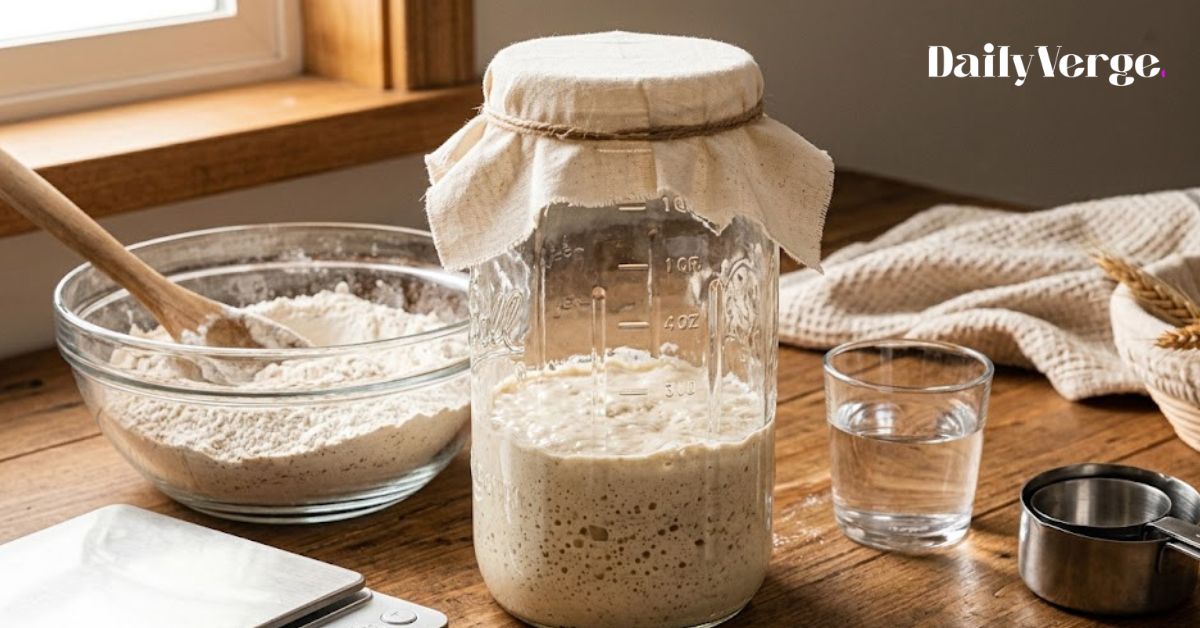
Learning the basics of natural baking has become very popular among home bakers, especially those who enjoy traditional bread-making methods. One of the most important foundations in this process is understanding how to make sourdough starter. This simple mixture of flour and water captures natural yeast from the environment and becomes the base for baking flavorful bread at home. It requires patience, but the results are worth the effort.
When you begin how to make sourdough starter, you are essentially creating a living culture. Over time, this mixture develops bubbles, rises, and forms a stable environment for fermentation. This natural process replaces the need for commercial yeast and adds depth to homemade bread.
What this mixture really is
A sourdough starter is a living culture made from flour and water that naturally collects wild yeast and beneficial bacteria. It is the key ingredient in traditional bread baking. Understanding how to make sourdough starter helps beginners learn how fermentation works in a simple and practical way.
This mixture grows stronger over time as microorganisms feed on the flour. As it develops, it becomes capable of leavening bread and giving it a soft texture and slightly tangy flavor that many people enjoy.
Basic ingredients needed
To begin how to make sourdough starter, you only need a few basic ingredients found in most kitchens. Flour and water are the main components. Whole wheat or rye flour can help speed up early fermentation, while all-purpose flour works well for long-term use.
Clean water is also important because chemicals like chlorine can slow down yeast development. A glass jar or container is used to hold the mixture, and a loose cover helps keep airflow while preventing contamination.
First stage of preparation
The process starts by mixing equal parts of flour and water in a clean container. This mixture is then left at room temperature for about 24 hours. During this time, natural microorganisms begin to activate and prepare for fermentation. This early stage of how to make sourdough starter is all about creating the right environment for yeast to grow.
After the first day, small bubbles may begin to appear, which is a sign that fermentation has started slowly. The smell may also change slightly as natural bacteria become active.
Early fermentation development
During the next few days, the mixture begins to show more activity. You may notice bubbles forming and a slight rise in volume. This is a normal part of the process and shows that the culture is becoming active.
At this stage of how to make sourdough starter, regular feeding begins. A portion of the mixture is removed, and fresh flour and water are added to maintain balance. This feeding process encourages stronger yeast growth and prevents the mixture from becoming too acidic or inactive.
Building strength over time
As days pass, the mixture becomes more predictable. It may rise and fall in a regular cycle, showing clear signs of fermentation. The smell also becomes more pleasant and slightly tangy. Consistency is very important here, as how to make sourdough starter depends heavily on maintaining a regular feeding routine.
The culture slowly becomes stronger, and the bubbles become more visible. This indicates that the yeast population is increasing and becoming more stable for baking use.
Feeding routine and care
Feeding is one of the most important parts of maintaining a healthy culture. Each time you feed it, you discard part of the mixture and replace it with fresh flour and water. This keeps the yeast active and balanced.
In warmer environments, feeding may need to be done twice a day. In cooler temperatures, once a day is usually enough. When learning how to make sourdough starter, consistency in feeding times plays a major role in success.
Ignoring the feeding schedule can slow down fermentation or weaken the culture, so regular care is essential.
Common mistakes during the process
One of the most common mistakes is impatience. Many beginners expect quick results, but fermentation takes time. Temperature also plays an important role, as a cold environment can slow down yeast activity.
Another issue is using unclean tools or contaminated water. These small mistakes can affect the quality of the culture. Understanding how to make sourdough starter helps avoid these errors and improves success rates.
How to know when it is ready
A mature starter shows clear signs of readiness. It will double in size within a few hours after feeding and contain many visible bubbles. The texture becomes airy, and the smell is pleasant and slightly sour.
One simple test is placing a small spoonful in water. If it floats, it is usually ready for baking. At this point, how to make sourdough starter becomes more about maintenance than creation, as the culture is fully active.
Proper storage methods
Once the culture is strong, it can be stored at room temperature or in the refrigerator depending on how often it is used. Room temperature storage requires daily feeding, while refrigeration slows down fermentation and requires weekly feeding.
When stored properly, it can last for a long time and be used whenever needed. Many bakers keep their starter for years, continuing the tradition of natural bread-making. Proper storage is an important part of how to make sourdough starter successfully in the long term.
Helpful tips for better results
Using whole grain flour in the beginning helps speed up fermentation because it contains more nutrients for yeast growth. Keeping the mixture in a warm but stable environment also improves results.
Clean utensils and containers are important to avoid contamination. Over time, experience helps you understand the texture, smell, and timing of the process better, making baking easier and more consistent.
Conclusion
Creating a natural baking culture at home is a rewarding experience that connects you with traditional cooking methods. With patience, care, and simple ingredients, anyone can learn this process and enjoy fresh homemade bread. Once established, it becomes a long-lasting kitchen companion that continues to grow and improve with time.
FAQs
Why is my starter not bubbling
This usually happens when the environment is too cold or the mixture is not being fed regularly. Keeping it in a warmer place and maintaining a feeding schedule usually solves the issue.
Can I use any flour
Yes, most flours work, but whole wheat and rye are better for faster fermentation because they contain more nutrients.
How long does it take to become active
It usually takes around 5 to 10 days depending on temperature and feeding consistency before it becomes strong enough for baking.
What should it smell like
A healthy starter has a slightly tangy and pleasant smell. A very bad or rotten smell usually means something has gone wrong.
Do I need to feed it every day
Yes, if it is kept at room temperature. If stored in the refrigerator, weekly feeding is enough to maintain it.
Read more delicious food tips.
