


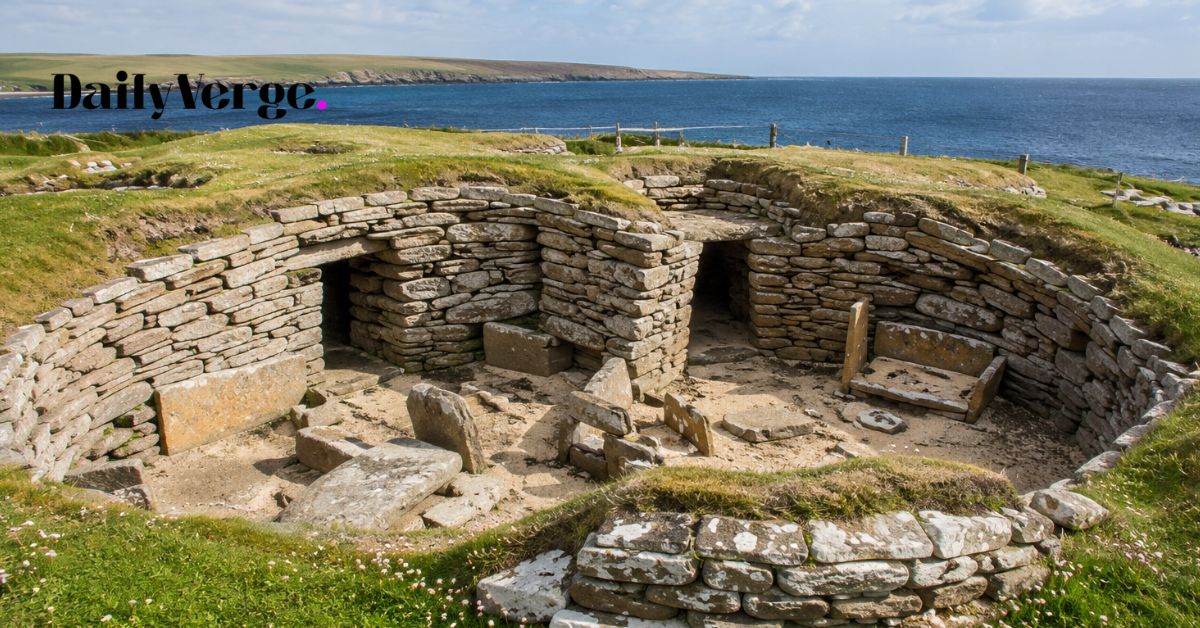
Imagine walking into a stone house that was built more than 5,500 years ago and is still standing today. The knap of howar offers exactly that experience. Hidden on the peaceful island of Papa Westray in Orkney, Scotland, this remarkable archaeological site provides a rare glimpse into the lives of some of Europe’s earliest farming communities. Long before castles, cities, or even the pyramids of Egypt, people were building durable homes using local stone and creating thriving settlements.
Unlike many prehistoric sites where only foundations remain, the Knap of Howar preserves much of its original structure, allowing visitors and researchers to understand how Neolithic families lived, worked, and adapted to their environment. Today, it remains one of Scotland’s most important historical landmarks and continues to attract historians, archaeologists, and travellers from around the world.
What Is the Knap of Howar?
The knap of howar is one of the oldest surviving stone-built farmsteads in north-west Europe. Located on the island of Papa Westray in the Orkney archipelago, the settlement dates from around 3800 BC to 2800 BC. This extraordinary age makes it several centuries older than the famous village of Skara Brae.
The site consists of two adjoining stone buildings connected by a passage. These homes were occupied by farming families who relied on agriculture, livestock, fishing, and gathering natural resources from the surrounding coastline. The remarkable preservation of the buildings has helped archaeologists reconstruct many aspects of everyday Neolithic life.
Where Is the Knap of Howar Located?
The Knap of Howar stands on the western coast of Papa Westray, one of the northernmost inhabited islands in Orkney, Scotland. Although Papa Westray is relatively small and remote, it is rich in prehistoric monuments that reflect thousands of years of human settlement.
Visitors usually reach the island by ferry or a short domestic flight from mainland Orkney. The peaceful landscape, dramatic coastline, and ancient archaeological sites create an unforgettable experience for anyone interested in Scotland’s deep history.
Its coastal location likely provided the original inhabitants with easy access to fishing grounds while also offering fertile land suitable for early farming.
The Remarkable Age of This Ancient Settlement
One of the most fascinating aspects of the knap of howar is its incredible age. Radiocarbon dating indicates that people lived here more than 5,500 years ago during the Neolithic period.
At that time, farming had only recently spread across Britain. Communities were beginning to settle permanently instead of living as nomadic hunter-gatherers. The people who occupied this farmstead cultivated crops, raised animals, and built durable homes that could withstand Orkney’s harsh weather.
Its survival for thousands of years makes it one of Europe’s finest examples of early domestic architecture.
Discovery and Archaeological Excavation
Although local people had long known about the stone structures, systematic archaeological excavations during the twentieth century revealed the site’s true significance.
Excavations uncovered an impressive range of evidence, including:
- Stone-built hearths
- Storage cupboards
- Stone benches
- Grinding stones
- Pottery fragments
- Animal bones
- Shell deposits
- Bone tools
- Agricultural remains
These discoveries helped researchers understand how Neolithic families organised their homes and managed their daily activities. The findings also demonstrated that the settlement was occupied for many centuries.
Architecture That Has Survived Millennia
The architecture of the Knap of Howar reflects remarkable engineering skills despite being created with simple tools.
The buildings feature exceptionally thick stone walls constructed using dry-stone techniques without mortar. Large sandstone slabs were carefully stacked to produce strong, weather-resistant structures capable of enduring Orkney’s powerful winds.
Inside the houses, archaeologists found several built-in features that made everyday life more practical. Stone cupboards provided storage, while central hearths supplied warmth, light, and cooking facilities. Stone partitions divided interior spaces, allowing different household activities to take place efficiently.
Although the original roofs no longer survive, experts believe they were probably constructed from timber, driftwood, turf, thatch, or even whale bone covered with insulating materials.
Daily Life Inside the Homes
Life inside these ancient houses was surprisingly organised. Archaeological evidence paints a vivid picture of families living together, preparing food, caring for livestock, and maintaining their homes throughout the seasons.
The residents likely spent much of their time tending fields, repairing buildings, grinding grain, preparing meals, and making essential tools from stone and bone.
Unlike temporary shelters used by earlier hunter-gatherers, these homes represented permanent settlements where families established stable communities over generations.
Their ability to adapt to the challenging climate demonstrates remarkable resilience and practical knowledge of their environment.
Farming and Food Production
Agriculture formed the foundation of life at the knap of howar. Archaeological evidence suggests that the inhabitants cultivated barley and wheat while raising domesticated animals such as cattle, sheep, and pigs.
Fishing also played an important role. The nearby coastline supplied fish, shellfish, and seabirds, providing valuable sources of protein throughout the year.
Grinding stones discovered inside the houses indicate that grain was processed into flour, allowing residents to prepare bread and other simple foods. Animal bones recovered during excavations reveal a balanced farming economy that combined livestock management with crop cultivation.
This mixed approach reduced the risks associated with poor harvests and helped sustain the community over many generations.
What Archaeologists Have Learned
The site has transformed our understanding of early farming communities in Britain.
Researchers have discovered that Neolithic people possessed sophisticated building techniques, carefully planned domestic layouts, and organised agricultural systems far earlier than previously believed.
The quality of construction suggests that the builders understood structural stability, insulation, and efficient use of available materials. Their homes were designed for comfort as well as durability.
Excavated artefacts also indicate trade, craftsmanship, and cultural development within prehistoric Orkney, showing that these communities were far from primitive.
Comparison with Skara Brae
Many people compare the Knap of Howar with Skara Brae because both are outstanding Neolithic settlements in Orkney.
However, important differences exist.
| Feature | Knap of Howar | Skara Brae |
|---|---|---|
| Approximate Age | Around 3800 BC | Around 3200 BC |
| Buildings | Two stone houses | Multiple interconnected houses |
| Main Purpose | Farmstead | Larger village |
| Location | Papa Westray | Mainland Orkney |
| Historical Importance | One of Europe’s oldest preserved stone homes | Best-preserved Neolithic village |
While Skara Brae attracts more visitors, the Knap of Howar provides equally valuable evidence of early domestic life and may represent an earlier stage of permanent settlement.
Why the Site Is So Important
The knap of howar is important because it bridges the gap between prehistoric hunting communities and settled agricultural societies.
Its preservation allows researchers to examine:
- Early house design
- Ancient farming methods
- Domestic organisation
- Food preparation
- Community development
- Construction techniques
- Neolithic craftsmanship
Without sites like this, much of our understanding of early European civilisation would rely on speculation rather than physical evidence.
Conservation and Preservation
Protecting such an ancient monument requires careful conservation. Exposure to wind, rain, sea salt, and changing weather conditions can gradually damage the stone structures.
Conservation specialists regularly monitor the site to minimise deterioration while preserving its authenticity. Visitors are encouraged to respect the monument by remaining on designated paths and avoiding unnecessary contact with the ancient walls.
These preservation efforts ensure that future generations can continue learning from one of Scotland’s most extraordinary archaeological treasures.
Visiting the Knap of Howar
Today, the Knap of Howar is open to visitors throughout the year and can be explored free of charge.
Travellers visiting Papa Westray often combine their trip with other nearby prehistoric attractions, making the island an excellent destination for history enthusiasts.
The surrounding scenery adds to the experience, with dramatic coastal views, abundant wildlife, and peaceful landscapes that have changed remarkably little since Neolithic times.
Because the site is outdoors, comfortable footwear and weather-appropriate clothing are recommended for visitors.
Interesting Facts About the Knap of Howar
- It is more than 5,500 years old.
- It predates Skara Brae by several centuries.
- It is among the oldest surviving stone houses in Europe.
- The settlement consists of two connected stone buildings.
- Built-in stone furniture can still be seen today.
- Early farmers raised livestock and cultivated crops here.
- The site overlooks the Atlantic coastline.
- Archaeologists recovered pottery, bone tools, and grinding stones during excavation.
- The buildings were constructed without modern cement or mortar.
- It remains one of Scotland’s most significant Neolithic archaeological sites.
Lessons We Can Learn Today
Although separated from us by thousands of years, the people who lived at the Knap of Howar demonstrate timeless human qualities.
Their careful planning, practical engineering, and sustainable use of natural resources allowed them to create homes capable of surviving one of Britain’s harshest climates. Their achievements remind us that innovation did not begin with modern technology. Human creativity and resilience have shaped civilisation for thousands of years.
The settlement also highlights the importance of preserving archaeological heritage. Every ancient monument contributes another piece to the story of humanity, helping us understand where we came from and how societies evolved.
Conclusion
The knap of howar stands as one of the world’s greatest surviving examples of early human settlement. Its remarkable preservation, extraordinary age, and wealth of archaeological discoveries provide invaluable insight into the lives of Scotland’s first farming communities. From its carefully constructed stone houses to the everyday objects left behind by its inhabitants, every part of the site tells a fascinating story about resilience, innovation, and survival.
Whether you are passionate about archaeology, fascinated by ancient history, or planning a visit to Orkney, this remarkable farmstead offers a unique opportunity to connect with a civilisation that flourished more than five millennia ago. Its enduring legacy continues to inspire researchers and visitors alike, ensuring its place among Britain’s most treasured prehistoric landmarks.
FAQs
What is the Knap of Howar?
The Knap of Howar is an ancient Neolithic stone farmstead on Papa Westray in Orkney, Scotland. It is considered one of the oldest surviving stone houses in Europe.
How old is the Knap of Howar?
Archaeologists believe the settlement dates from around 3800 BC, making it more than 5,500 years old.
Why is the Knap of Howar famous?
It is famous because it predates Skara Brae and offers exceptional evidence of early farming communities and Neolithic domestic life.
Can visitors explore the Knap of Howar?
Yes. The site is open to visitors year-round, and admission is generally free, allowing people to experience this remarkable prehistoric monument.
What was discovered during excavations?
Archaeologists uncovered stone furniture, hearths, pottery, animal bones, grinding stones, and bone tools that reveal how Neolithic families lived and worked.
The knap of howar continues to inspire archaeologists, historians, and travellers with its extraordinary history and remarkable preservation. If you enjoy informative articles that explore unique places and historical discoveries, you might also be interested in SEO Instant Appear HighSoftware99.com: What It Is, How It Works, and What You Should Know.
