


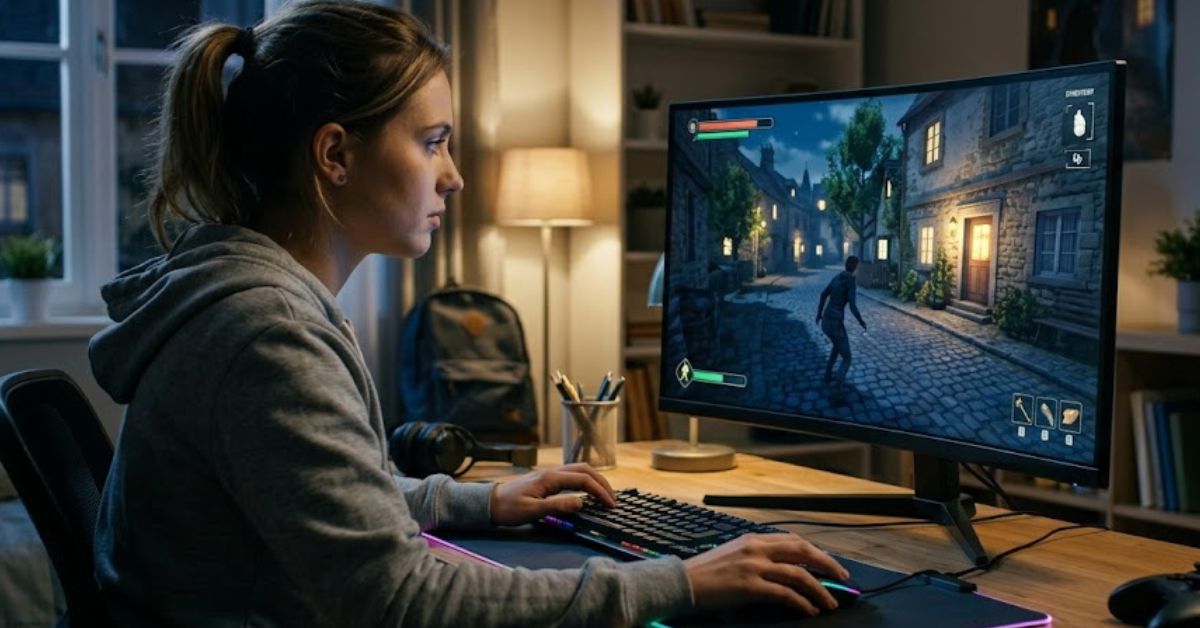
Stealth games often rely on complex mechanics and long campaigns, but pilfer game takes a different path. It offers a short yet rewarding experience where every decision matters. Instead of fighting enemies, players quietly explore a peaceful town, watch the movements of local residents, and collect valuable items without getting caught. This simple idea creates a surprisingly enjoyable challenge that appeals to fans of indie games and casual players alike.
If you’re curious about how the game works, what makes it unique, and whether it’s worth playing today, this guide covers everything you need to know.
What Is Pilfer Game?
Pilfer game is a first-person indie stealth game developed by Sokpop Collective, an independent game studio known for creating small experimental titles. Rather than focusing on action or lengthy storytelling, the game challenges players to rely on observation, timing, and careful planning.
You begin in a quiet town where houses contain valuable objects waiting to be discovered. Your objective is simple: enter buildings, collect as many valuables as possible, avoid being seen, and escape with the highest score. Although the idea sounds straightforward, success depends on patience and smart decision-making.
The Story Behind the Game
Unlike many modern games, pilfer game does not rely on an extensive storyline. Instead, the environment tells its own story. The peaceful streets, occupied homes, and daily routines of the town’s residents create a believable setting where every house feels like part of a living neighborhood.
The game was released in 2019 as one of Sokpop Collective’s monthly indie projects. The developers are known for experimenting with creative gameplay ideas rather than building large open-world adventures. Pilfer reflects this philosophy by delivering a focused experience that players can enjoy in a single sitting while still encouraging multiple playthroughs.
How Pilfer Game Works
The gameplay revolves around stealth and exploration. Players move freely around the town while paying close attention to the behavior of nearby residents. Since each person follows a routine, learning their movements becomes an important part of planning a successful burglary.
Entering locked buildings requires solving a simple lock-picking challenge. Once inside, players search rooms for valuable objects such as silverware, jewelry, and other collectible items. Every successful theft increases the overall score, but being careless can quickly end the run.
This design rewards observation instead of fast reactions. Waiting for the right opportunity often leads to better results than rushing into danger.
Gameplay Features
Several features make pilfer game enjoyable despite its modest size.
The first-person perspective creates a stronger sense of immersion while exploring houses and narrow streets. The town itself is compact but thoughtfully designed, encouraging players to learn shortcuts and discover hidden locations.
One of the most interesting mechanics is the lock-picking system. Rather than automatically opening doors, players interact with a short mini-game that adds tension without becoming frustrating.
Another important feature is the behavior of non-player characters. Residents continue their daily routines, forcing players to watch carefully before entering a property. These predictable patterns reward patience and careful planning.
Although the original release included an online leaderboard, it is no longer actively maintained. Even so, many players continue replaying the game to improve their personal scores.
What Makes the Game Different?
Many stealth games focus on defeating enemies after being discovered. Pilfer game avoids that approach entirely. Remaining unnoticed is always the safest option, making every successful theft feel satisfying.
The short length is another strength rather than a weakness. Instead of requiring dozens of hours, the game delivers its core experience in a brief session. This makes it easy to replay while experimenting with different routes and strategies.
The low-poly visual style also deserves attention. Rather than chasing realistic graphics, the developers created a clean and charming world that matches the relaxed atmosphere of the game.
Tips for New Players
New players often rush into buildings as soon as they spot valuable items. A better strategy is to spend a few minutes watching the movement of nearby residents before making a move.
Learning the layout of the town can also save valuable time. As you become familiar with each building, planning efficient routes becomes much easier.
Avoid collecting every object you see if it increases the chance of being caught. Sometimes leaving a less valuable item behind is the smarter decision.
Finally, practice the lock-picking mechanic whenever possible. Becoming comfortable with it allows you to enter buildings more quickly while reducing the risk of detection.
Benefits of Playing Pilfer Game
One of the biggest advantages is accessibility. The controls are simple, making the game suitable for both experienced stealth fans and newcomers.
Its short playtime also makes it ideal for players who have limited free time. A complete session usually lasts only a short period, yet still feels rewarding.
The gameplay encourages observation, patience, and strategic thinking instead of quick reflexes. These qualities create a relaxing but engaging experience that stands out from many modern action games.
Limitations to Consider
While the game has many strengths, it also has limitations.
Players looking for a deep narrative or character development may find the experience too simple. The world is intentionally small, so exploration is limited compared to larger stealth titles.
Long-term progression is also minimal. Once players understand the town layout, replayability mainly comes from improving scores rather than unlocking new content.
These limitations are expected because the game was designed as a compact indie experience rather than a full-scale adventure.
Is Pilfer Game Worth Playing?
For anyone who enjoys stealth mechanics, creative indie games, or short gaming sessions, pilfer game remains a worthwhile choice. Its simple design proves that enjoyable gameplay does not always require complex systems or massive worlds.
The combination of careful exploration, satisfying theft mechanics, and replayable score chasing creates an experience that feels polished despite its small scope. While it may not replace larger stealth franchises, it offers something refreshingly different for players who appreciate focused game design.
Conclusion
Pilfer game demonstrates how a simple idea can become an enjoyable gaming experience when executed well. Instead of relying on combat, lengthy stories, or oversized maps, it rewards patience, observation, and careful planning. Its charming presentation, approachable mechanics, and replay value continue to make it a memorable indie title. If you enjoy thoughtful stealth gameplay and want a game that respects your time, this small adventure is well worth exploring.
FAQs
What is pilfer game?
Pilfer game is a first-person indie stealth game where players quietly steal valuables while avoiding detection.
How long does it take to finish the game?
Most players complete a session in about 10 to 20 minutes, though replaying for higher scores adds extra enjoyment.
Does the game include combat?
No. The gameplay focuses on stealth, exploration, and avoiding being caught rather than fighting enemies.
Is pilfer game suitable for beginners?
Yes. Its simple controls and straightforward mechanics make it easy for new players to learn.
Can the game be replayed?
Yes. Players often replay the game to discover better routes, improve strategies, and achieve higher scores.
