


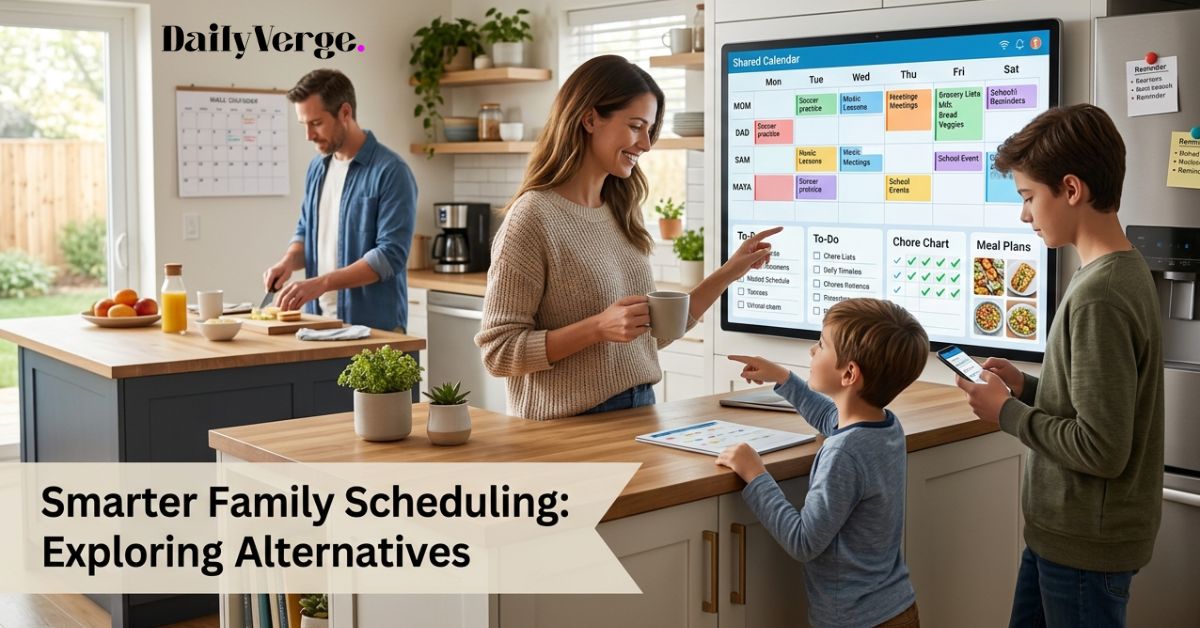
In today’s fast-paced household routines, managing school schedules, work meetings, chores, and personal tasks has become more complicated than ever. Many families are turning to digital wall calendars and smart scheduling systems to bring order into their daily lives. One of the most popular solutions in this space is Skylight Calendar, but not everyone finds it the perfect fit. That is why many users start searching for skylight calendar alternatives to find something more flexible, affordable, or feature-rich that better matches their lifestyle.
The demand for skylight calendar alternatives has grown significantly as families look for tools that combine simplicity with powerful organization features. Some want a cheaper option without subscriptions, while others prefer apps or smart displays that integrate more deeply with existing devices like phones, tablets, or smart home systems. This shift shows that modern users are no longer satisfied with just a calendar—they want a complete household management system.
Why people are exploring better scheduling solutions
Families today deal with overlapping responsibilities that require constant coordination. From managing kids’ extracurricular activities to tracking grocery lists and work deadlines, traditional methods like paper planners are no longer enough. Even basic digital calendars sometimes fall short when multiple people need real-time updates.
This is one of the main reasons users start researching skylight calendar alternatives. They are looking for tools that offer better shared access, easier updates, and more visual organization. Many users also express concerns about subscription costs and limited customization, which pushes them toward more flexible options.
Smart display options for family organization
One of the most popular categories of skylight calendar alternatives includes smart display devices designed specifically for family organization. These devices typically sit in the kitchen or living room and act as a central hub for schedules, reminders, and daily tasks.
Products in this category often include touchscreens, voice integration, and syncing with cloud calendars. They are designed to be visible at all times, which helps families stay aware of upcoming events without needing to check their phones constantly. Some models also include chore tracking, meal planning, and photo display features, making them multifunctional household tools.
However, not all smart displays are equal. Some offer better integration with Google services, while others focus more on visual simplicity or automation features. Choosing the right one depends on how much control and customization a household needs.
Mobile apps and cloud-based scheduling tools
Another strong category of skylight calendar alternatives includes mobile apps and cloud-based family organizers. These solutions are popular because they do not require additional hardware and can be accessed from anywhere.
Apps like shared family calendars and task managers allow multiple users to update schedules in real time. This makes coordination easier for families who are often on the move. Many of these apps also include features like color-coded events, reminders, and shared to-do lists.
The biggest advantage of app-based systems is flexibility. They can be used on smartphones, tablets, and computers, making them highly accessible. However, the downside is that they rely on users actively checking their devices, which may not work well for families who prefer a physical or always-visible solution.
AI-powered and advanced productivity systems
A newer category emerging among skylight calendar alternatives includes AI-driven scheduling tools. These systems go beyond simple calendar management and actively help users plan their day more efficiently.
AI scheduling tools can automatically arrange meetings, adjust time blocks based on priorities, and reduce scheduling conflicts. Some platforms even analyze user behavior to suggest better time management strategies. This level of automation is especially useful for busy professionals who want to optimize productivity.
While powerful, these tools may feel complex for users who only want simple family scheduling. They are best suited for individuals or households that are comfortable with advanced digital systems and automation.
DIY and customizable dashboard setups
For users who prefer full control, DIY dashboard systems are another interesting option. These setups often use affordable screens or small computing devices to create a fully customized family dashboard.
With DIY solutions, users can design their own layout, choose which widgets to display, and integrate multiple services like calendars, weather updates, and reminders. This makes them highly flexible and cost-effective in the long term.
However, DIY setups do require technical knowledge and initial setup effort. They are not plug-and-play solutions, but they offer unmatched customization for users who enjoy building their own systems.
How to choose the right solution for your home
Selecting the best system depends on your household’s needs and habits. Some families prioritize simplicity and visibility, while others want advanced automation and deep integration with other tools.
If your goal is to reduce screen dependency and keep schedules visible in shared spaces, a smart display may be ideal. If you prefer flexibility and remote access, app-based solutions are more practical. For those who value automation and efficiency, AI-powered tools offer the most advanced features. Meanwhile, DIY dashboards are best for users who want complete control over design and functionality.
Understanding your daily routine is the key to choosing the right system instead of focusing only on features or pricing.
Conclusion
Modern families are moving away from traditional scheduling methods and exploring smarter, more connected systems to manage their time. Whether through smart displays, mobile apps, AI tools, or DIY dashboards, there are many ways to stay organized without relying on a single solution. As households become more digitally connected, finding the right balance between simplicity and functionality becomes even more important. Exploring skylight calendar alternatives can help families discover a system that truly fits their lifestyle and improves daily coordination.
FAQs
What is the main purpose of a family scheduling system?
It helps households organize events, tasks, and reminders in one shared space so everyone stays updated and coordinated.
Are mobile apps enough for managing family schedules?
They can be very effective, especially for families comfortable with smartphones, but they require regular checking to stay updated.
Do smart displays require a subscription?
Some models do, while others offer basic features without ongoing fees. It depends on the brand and system.
Are AI scheduling tools suitable for families?
They can be useful for busy households, but they are more commonly used by professionals who need advanced time management.
Is a DIY dashboard difficult to set up?
It can require some technical effort initially, but it offers high customization and long-term flexibility once configured.
Read more. technology guides and helpful insights on our website.
