


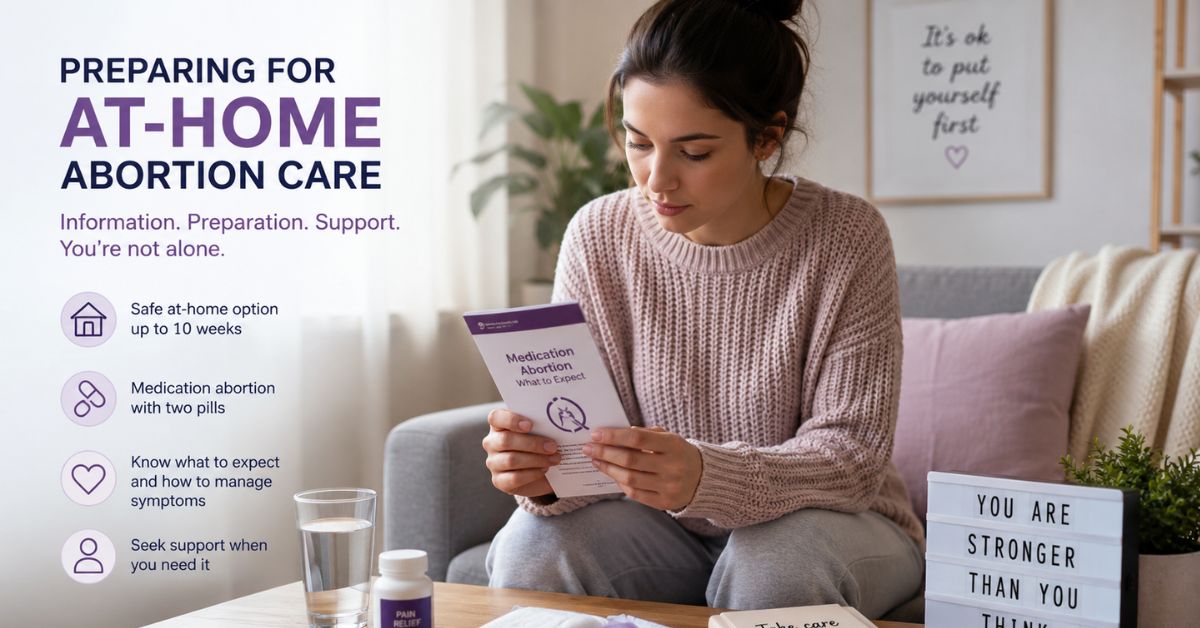
It is one thing to choose a path, and another to be ready for the road that follows. This is a saying that applies to nearly all facets of life, and abortion is no exception to it. Not to discount the decision-making part itself, but even when you are certain about your choice, chances are that you feel a mix of different emotions, questions, and, most important of all, concern about what comes next.
Given that at-home abortion is nowadays the preferred option of most women in the UK, it is important that you prepare yourself in terms of what to expect, how to organise your space and when to seek support at any point in this journey. Keeping that in mind, let’s go over everything you need to know to make this process as comfortable as possible.
How does at-home abortion work?
Most women in the UK tend to seek their medication for abortion through regulated telemedicine services after consulting with a qualified healthcare professional. Generally, this medication is either posted to your home or collected from a clinic and is time and time again proven to be a safe, effective way of ending an unwanted pregnancy. Do note that you should obtain these medicines only from legitimate, regulated healthcare providers to minimise any future risks or complications. In fact, even the NHS advises against purchasing these pills from any unregulated online source or from outside the UK because there is no way to guarantee their safety or authenticity.
Another thing worth remembering is that you can only use this method for up to 10 weeks of gestation. After that, your only option would generally be to seek a surgical abortion. Now, medical abortion typically involves two pills taken one after the other over the course of 24-48 hours. The first, mifepristone, stops your pregnancy in its tracks by stimulating certain hormones in the body. Then the second pill, misoprostol, is taken to help the uterus contract and expel the pregnancy tissue, thus ending the pregnancy. After taking the second pill, you will likely experience some cramping and bleeding, but be assured that you have already overcome the toughest part of this whole thing.
How can you best organise your space for an at-home abortion?
Look, the first and arguably best thing you can do for yourself is to get several hours of rest after the second medication (second pill) has taken effect. A lot of people make this mistake, assuming that they can simply continue their day as normal. While there is nothing wrong with that, some of the symptoms of this process can be a little difficult to manage.
To this end, prepare a comfortable space for your recovery, one that includes all your essentials – things like sanitary pads, water, light snacks, clothing, pain-relief medicine, and heating pads. Make sure that you choose a day when you have no responsibilities. Postpone all your meetings and avoid any commitments that would ask you to leave your house. If you have kids, arrange child care. Again, for the day when you take the second pill, try to do everything that you can to stay at home and get as much rest as possible. If you feel comfortable, you can also have a friend, family member, or your partner nearby, but this one is up to you, as some women prefer complete privacy over the alternative. The point is that this entire setup should make you feel safe and supported.
What exact symptoms should you expect after an at-Home Abortion?
As mentioned before, you will first experience a bit of cramping and bleeding within a few hours of taking misoprostol. The bleeding will feel heavier than a normal period and may also include blood clots. There is also a good chance you might experience nausea, dizziness, chills, or fatigue. If any of this happens, don’t panic, as even these symptoms are expected and will generally settle over time. Unfortunately, the pain from cramps can vary wildly from one person to another. Some women say that their cramps felt similar to a heavy menstrual period, while others have experienced stronger contractions that lasted for several months. This is part of the reason why you need to have painkillers at the ready when going through an abortion.
The good thing to know here is that your doctors will likely help you prepare for any possible complications or symptoms that may arise during this period. For instance, if you buy abortion pill online at The Gynae Centre, a very reputable clinic in London, you will receive thorough guidelines on what to expect, how you can best manage any discomfort, and when to contact your clinic if you have any concerns. Such places will often have professional support ready to assist you at any point in the process, so there is absolutely nothing for you to worry about.
When should you seek help with abortion care?
Despite how safe medication abortion has become in the last few years, you still need to watch out for a few red flags. If you experience extremely heavy bleeding, severe pain that does not improve with medication, persistent high fever, or any other symptoms that leave you feeling excessively unwell, please seek urgent medical care and contact your health care provider. Thankfully, most health care providers in London have a protocol for nearly every possible complication that can arise during this period. In fact, these pathways were introduced and expanded because they have consistently proven to be able to safely deliver abortion while maintaining extreme medical oversight. All you need to do is know what is normal and what is not to prevent unnecessary panic while ensuring you get help quickly if genuinely needed.
Recovering from an abortion and taking care of your health
Generally speaking, you should feel ready to return to your everyday life within a day or two of taking the pills, but you need to take it slow and rest when your body asks for it to avoid putting any pressure on your body. Be sure to complete any follow-up instructions or appointments your clinic requests. This may even include taking a pregnancy test several weeks later to confirm that the treatment was a successful one. Aside from physical recovery, take care of your mental health as well, as sadness, uncertainty, and similar negative emotions can often accompany this stage. If you find yourself struggling, seek counseling or therapy and try to engage with things you love. With time, you will surely come out of this stronger than ever before.
