


Starting a business comes with several important decisions, and one of the most critical choices is selecting the right business structure. Many entrepreneurs struggle when comparing llc vs sole proprietorship because both options seem simple at first but have major long-term differences. Understanding how each structure works can help you avoid legal issues, reduce taxes, and protect your personal assets as your business grows. This guide breaks everything down in a clear and practical way so you can confidently decide which option fits your goals.
Understanding Sole Proprietorship
A sole proprietorship is the simplest form of business ownership. It is owned and operated by one individual, and there is no legal separation between the owner and the business. This means all profits go directly to the owner, but it also means personal responsibility for all debts and liabilities.
Many freelancers, small shop owners, and independent contractors choose this structure because it is easy to set up and requires minimal paperwork. However, the simplicity comes with risk. If the business faces financial or legal trouble, the owner’s personal assets may be at stake.
What is an LLC?
A Limited Liability Company, commonly known as an LLC, is a more formal business structure that provides legal separation between the owner and the business. This separation is one of the main reasons people compare llc vs sole proprietorship when starting a business.
An LLC offers flexibility in taxation and provides protection for personal assets. If the business faces debt or legal issues, the owner’s personal property is usually protected. This makes it a popular choice for small business owners who want both simplicity and legal security.
Key Differences Between LLC and Sole Proprietorship
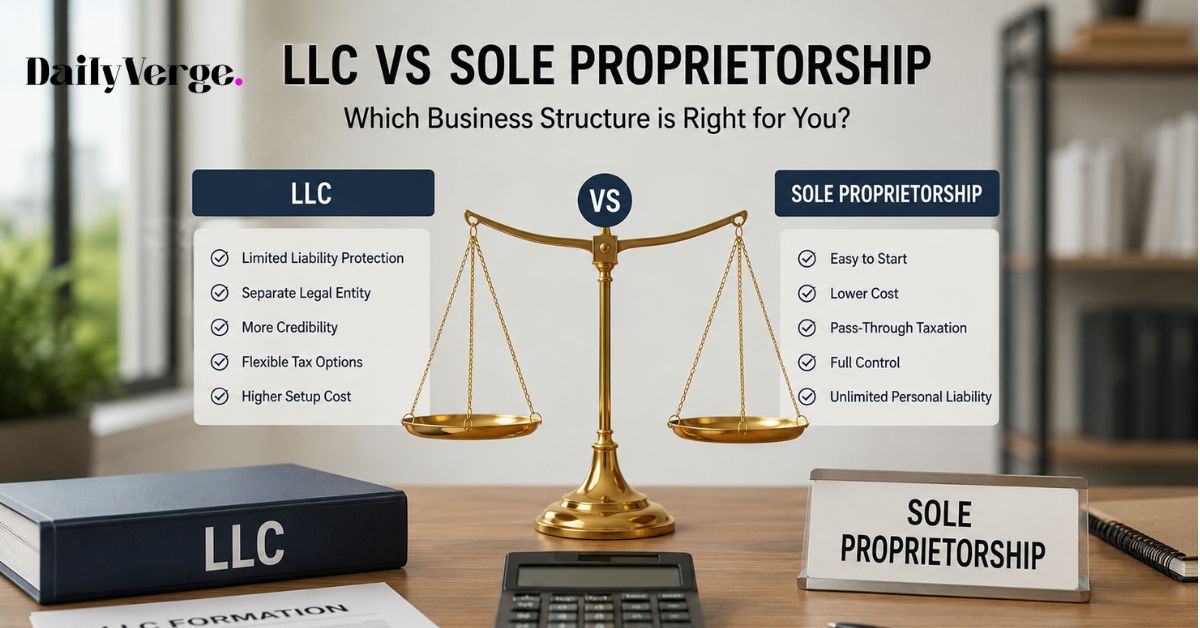
When comparing llc vs sole proprietorship, the most important differences come down to legal protection, taxation, and credibility. A sole proprietorship is easier to manage but offers no liability protection, while an LLC provides a legal shield that separates personal and business risks.
In terms of credibility, an LLC often appears more professional to customers, suppliers, and financial institutions. On the other hand, a sole proprietorship may be more suitable for individuals testing a business idea or working part-time.
Tax Differences You Should Know
Taxes are a major factor when evaluating llc vs sole proprietorship. In a sole proprietorship, all income is reported on the owner’s personal tax return, and self-employment taxes apply directly to all earnings. This makes tax filing simple but can sometimes lead to higher personal tax burdens.
An LLC is more flexible. By default, it is also taxed like a sole proprietorship, but it can choose different tax classifications depending on what is most beneficial. This flexibility allows business owners to potentially reduce tax liabilities as their income grows.
Another important point is that LLC owners may need to handle additional paperwork, especially if they choose to be taxed as an S-corporation in the future. However, many business owners find the added complexity worth the potential savings and protection.
Liability Protection and Risk
One of the biggest reasons entrepreneurs consider llc vs sole proprietorship is liability protection. In a sole proprietorship, there is no separation between personal and business liability. If the business is sued or falls into debt, the owner is personally responsible.
An LLC, however, provides limited liability protection. This means the business is treated as a separate legal entity. In most cases, personal assets such as homes, cars, and savings are protected from business liabilities. This protection is one of the strongest advantages of forming an LLC.
Costs and Setup Process
Cost is another major factor in choosing between llc vs sole proprietorship. A sole proprietorship is usually inexpensive to start. In many places, you only need basic business registration or a local permit.
An LLC typically requires more effort and money to set up. There are registration fees, possible annual maintenance fees, and additional paperwork. However, many entrepreneurs see this as an investment in long-term protection and business growth.
The setup process for a sole proprietorship is fast and straightforward, while an LLC involves filing legal documents with the state or relevant authority. Despite this, the process has become more accessible in recent years due to online registration systems.
Which Business Structure is Better?
Deciding between llc vs sole proprietorship depends on your business goals. If you are starting a small side hustle or testing a business idea with minimal risk, a sole proprietorship may be enough.
However, if you plan to scale your business, deal with clients, or handle financial transactions regularly, an LLC is often the better choice. It provides legal protection and helps build trust with customers and partners.
Freelancers, online store owners, and consultants often start as sole proprietors but later transition to LLCs once their income and risk increase.
Common Mistakes Business Owners Make
Many new entrepreneurs choose a structure without fully understanding the long-term impact of llc vs sole proprietorship. One common mistake is sticking with a sole proprietorship even after the business grows, which increases personal financial risk.
Another mistake is forming an LLC too early without considering the additional costs and responsibilities. Some business owners also fail to keep proper records, which can create tax and legal issues later.
Understanding your business stage and future goals is key to avoiding these mistakes and choosing the right structure from the beginning.
Conclusion
Choosing between business structures is a foundational decision that can shape your financial future. The comparison of llc vs sole proprietorship shows that each option has its own strengths and weaknesses. A sole proprietorship offers simplicity and low cost, while an LLC provides protection, flexibility, and long-term credibility.
The best choice depends on your risk level, business goals, and growth plans. Taking the time to evaluate both options carefully can help you build a stronger and more secure business foundation.
FAQs
What is the main difference between LLC and sole proprietorship?
The main difference is liability protection. A sole proprietorship has no separation between personal and business assets, while an LLC provides legal protection for personal property.
Is an LLC better for small businesses?
An LLC is often better for small businesses that expect growth or face financial risks because it offers legal protection and flexibility.
Can I switch from sole proprietorship to LLC later?
Yes, many business owners start as sole proprietors and later convert to an LLC when their business grows or becomes more profitable.
Which is cheaper to start?
A sole proprietorship is usually cheaper and easier to start because it requires minimal registration and paperwork compared to an LLC.
Do LLC owners pay less tax?
Not always. Taxes depend on income and structure, but an LLC offers more flexibility in choosing how the business is taxed.
Read more. business guides on our website.
